
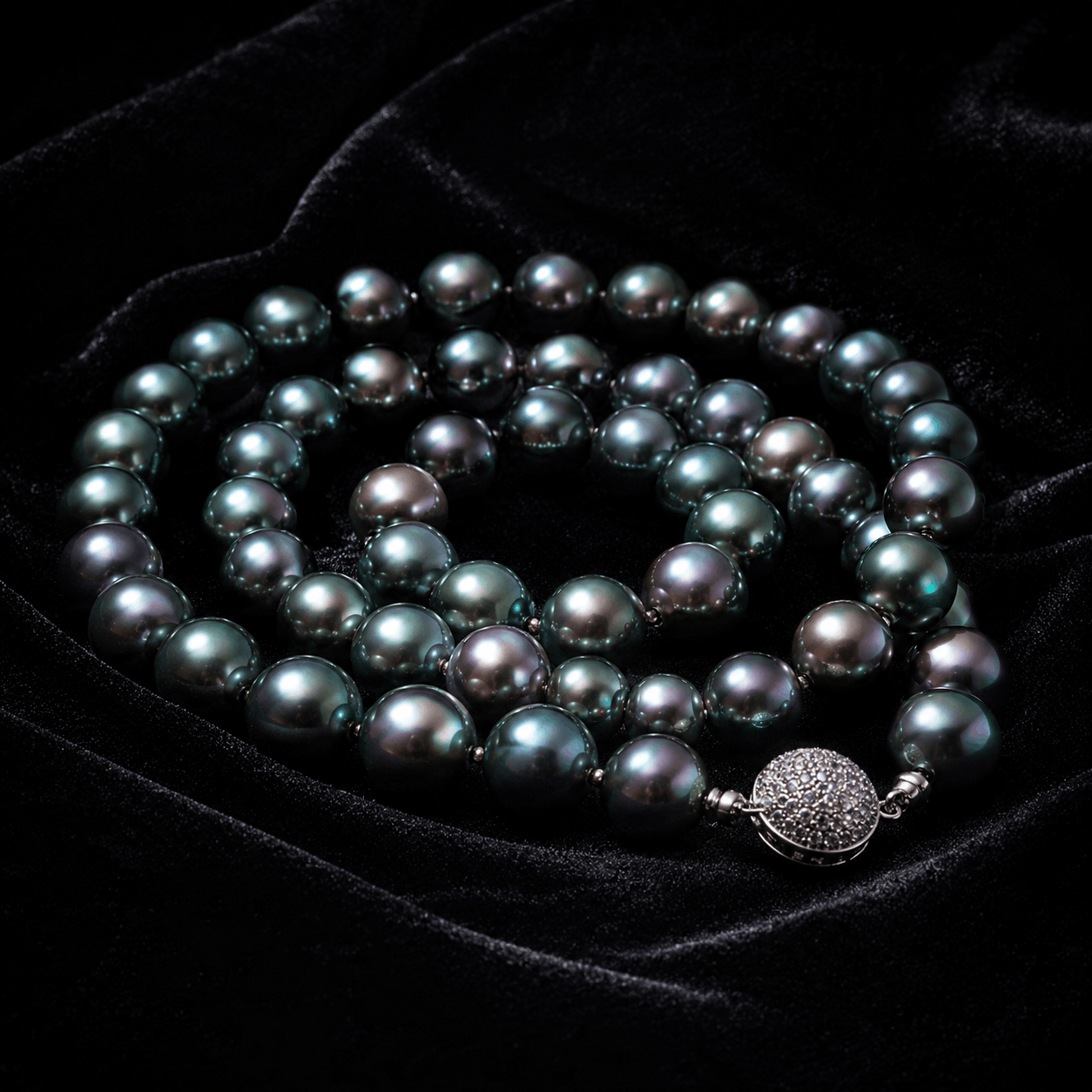
Saw a Tahitian pearl necklace for the first time at a pearl exhibition in Tokyo. Single strand. Dark peacock pearls. Each one slightly different — some more green, some more aubergine, all of them extraordinary. And the woman wearing it said she’d owned it for twelve years and people still commented on it every time she wore it. That’s the thing about a Tahitian pearl necklace — it has a presence that white pearl strands simply don’t. So here’s everything worth knowing before you buy one.
What Makes a Tahitian Pearl Necklace Different
A Tahitian pearl necklace isn’t just a dark pearl necklace. It’s something genuinely specific. The pearls come from the Pinctada margaritifera oyster — the black-lipped oyster farmed in the lagoons and atolls of French Polynesia. And the color is completely natural. No dye. No treatment. So the dark body color with those extraordinary overtones comes directly from the oyster itself — not from any process after harvest.
That natural color combined with thick saltwater nacre — typically 1.5mm to 3mm per pearl — is what gives a Tahitian pearl necklace its distinctive satiny luster. Not mirror-sharp like Akoya. Deeper. More dimensional. Like light moving through the pearl rather than bouncing off it. Plus the size range — typically 8mm to 16mm — means a Tahitian pearl necklace has real physical presence on the body in a way that smaller pearl types simply don’t.
Colors and Overtones — Where It Gets Extraordinary
Color is where a Tahitian pearl necklace becomes genuinely extraordinary. And understanding the color story before buying makes an enormous difference in choosing the right piece. The body color of a Tahitian pearl ranges from light grey through silver, dark grey and near-black. But body color is only part of what you see. The overtone — that iridescent secondary color sitting over the base — is what gives each pearl its distinctive character and what separates an exceptional piece from a merely good one.
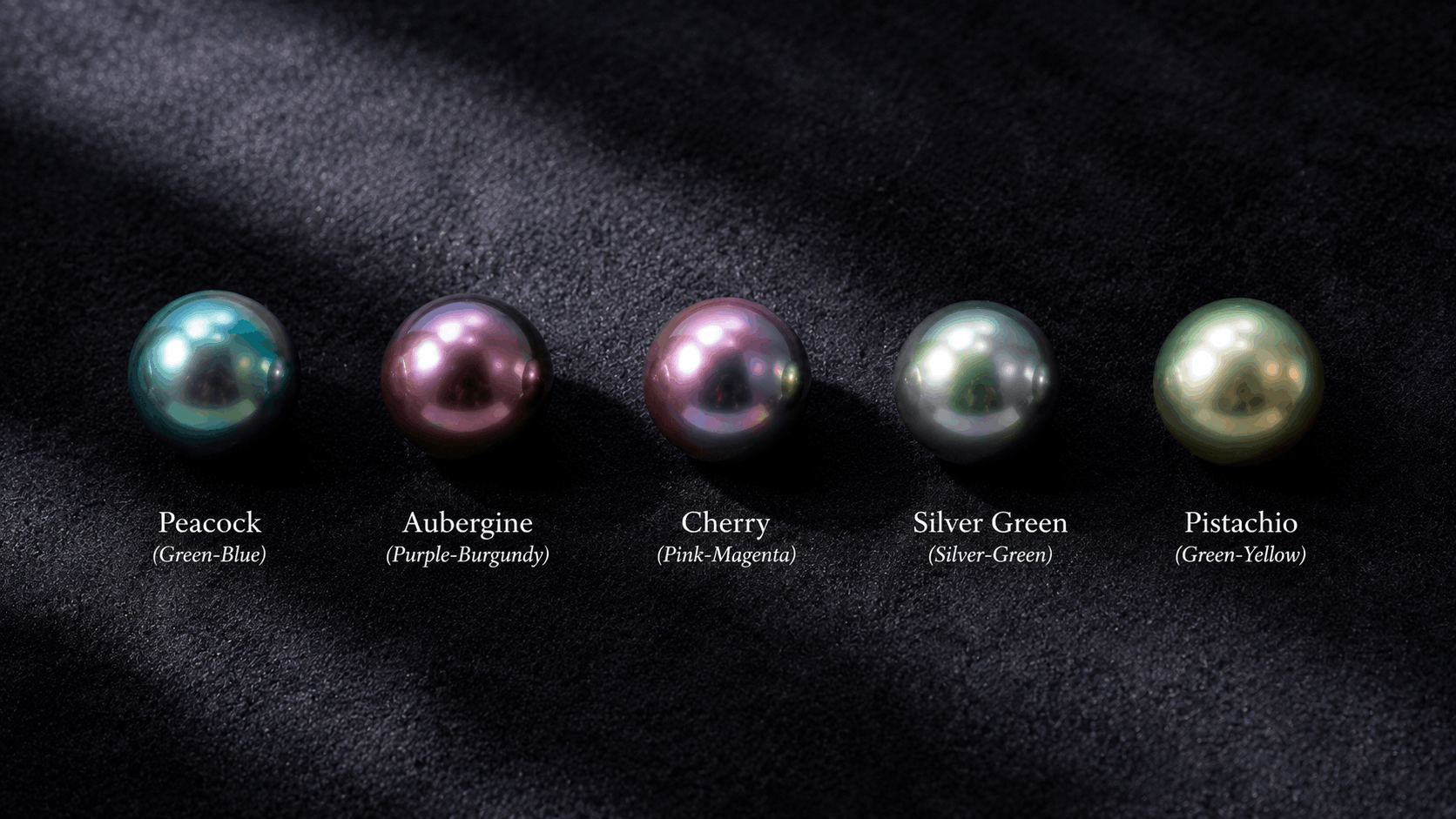
Peacock overtone is the most prized — a green-gold iridescence over dark grey that shifts with the light in ways that are genuinely difficult to describe. Aubergine, on the other hand, runs deep purple over dark and reads as extraordinarily luxurious. Cherry adds a reddish-rose warmth that’s rarer and particularly beautiful against warm skin tones. Silver-green is the most classic and widely available dark tone. And pistachio — a yellow-green overtone — is one of the more unusual and sought-after colors right now. So when evaluating a Tahitian pearl necklace, always check overtone consistency across the strand. Uniform overtone direction is a sign of skilled matching and genuinely higher quality.
Tahitian Pearl Necklace Sizes — What Works Best
Size matters significantly in a Tahitian pearl necklace — both for visual impact and for price. So understanding the size ranges before shopping helps enormously. The typical range runs from 8mm to 16mm, with most quality strands sitting between 9mm and 13mm for practical jewelry use.
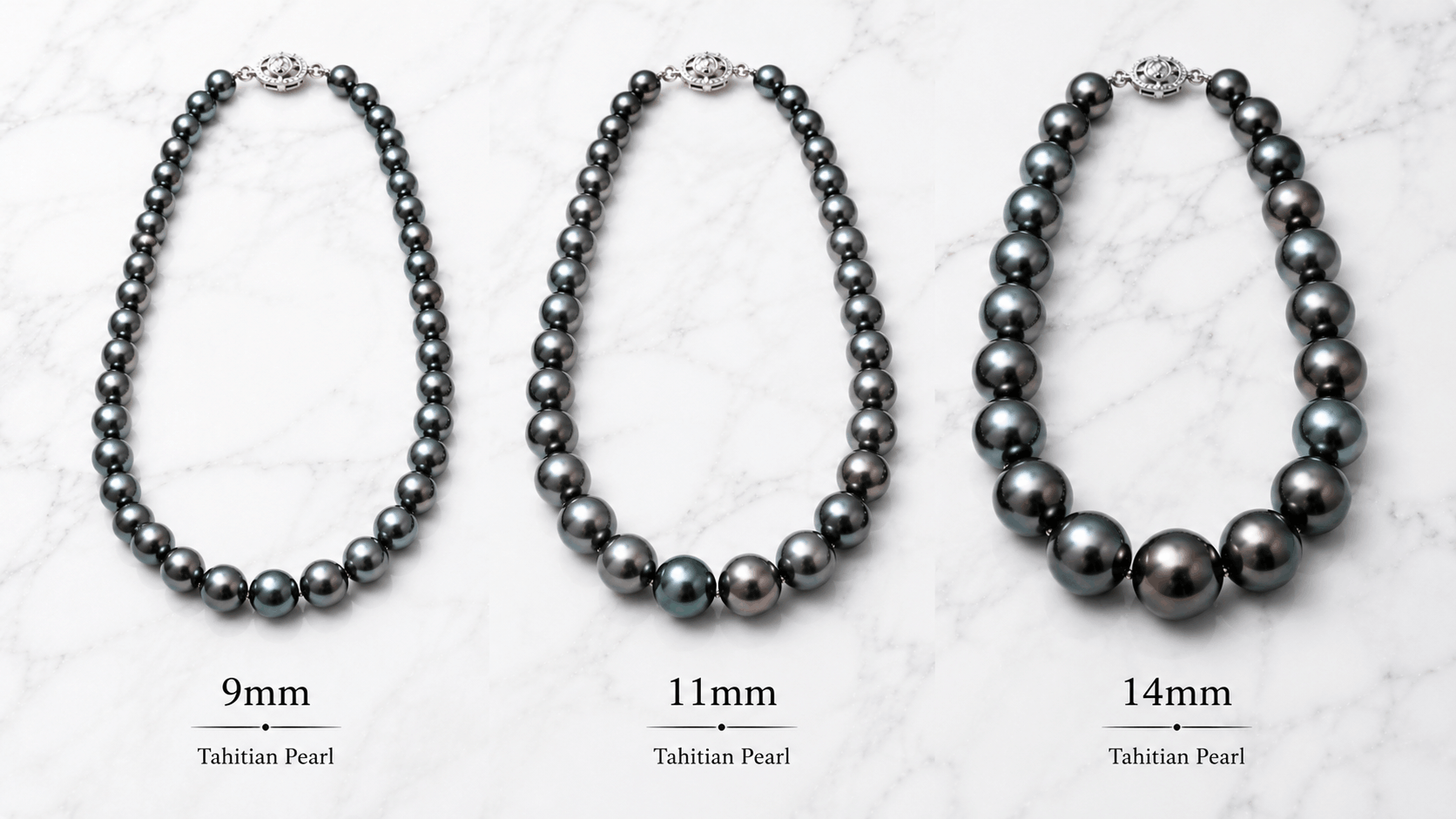
At 8mm to 9mm a Tahitian pearl necklace is refined and elegant — substantial enough to register clearly but not overwhelming for everyday wear. Mid-range at 10mm to 12mm is the practical sweet spot for most buyers. Real presence. Strong visual impact in photographs. And at this size the overtones become clearly visible across the full strand. Larger sizes at 13mm to 16mm are genuinely dramatic — rare, considerably more expensive and the natural choice for buyers who specifically want maximum impact. A single strand of 14mm matched Tahitian pearls is a statement that genuinely stops people mid-conversation.
Lengths and Styles — Choosing the Right Format
Length changes the whole character of a Tahitian pearl necklace — more so than with most other pearl types. Because the dark color and size interact differently with different necklines and clothing styles, so length selection matters more here than it does for a classic white strand.
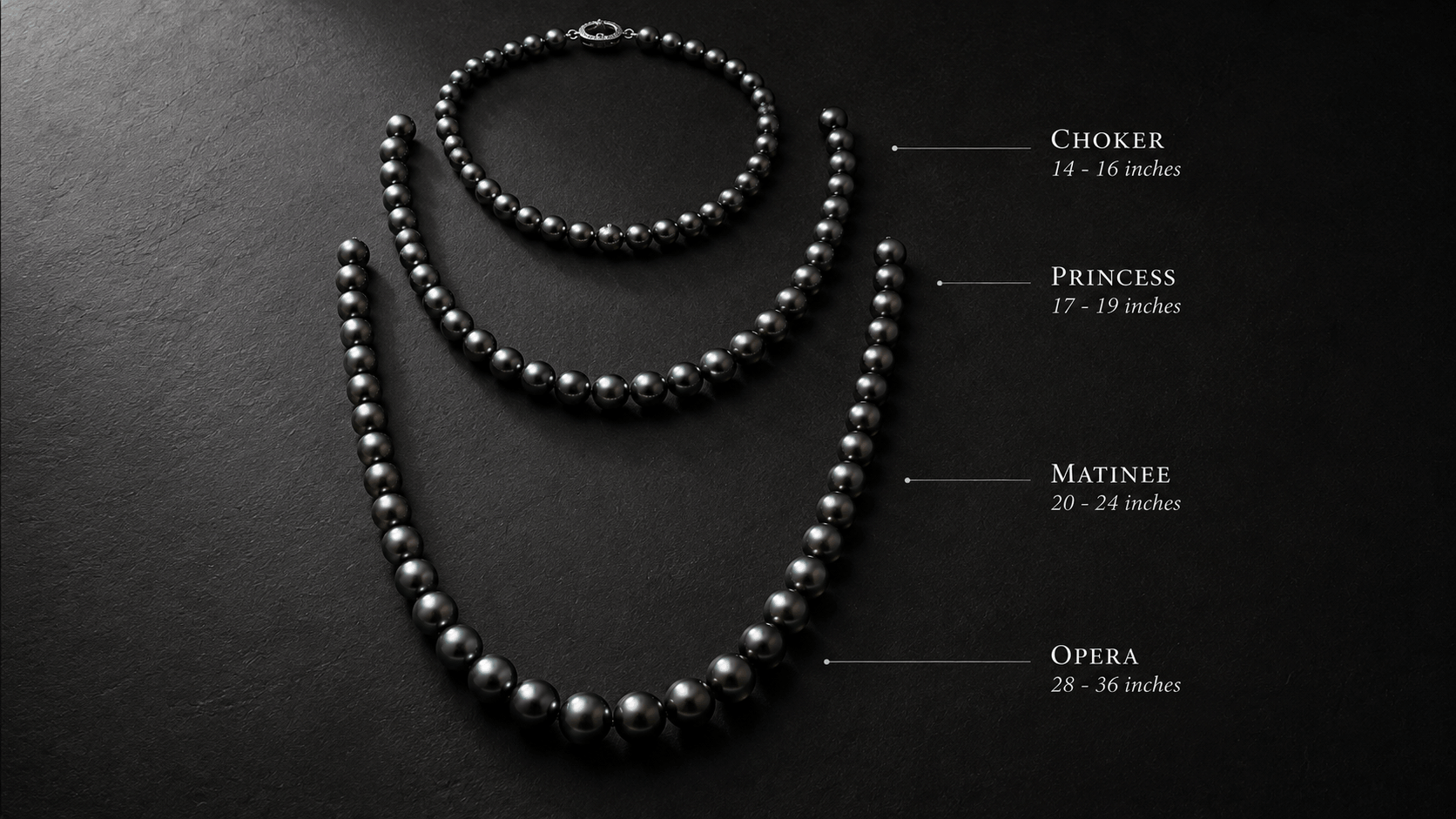
Choker length at 14 to 16 inches creates a bold contemporary look — the dark pearls against bare skin or a simple neckline is one of the most striking combinations in pearl jewelry. Princess length at 17 to 19 inches is the most versatile starting point and works across virtually every occasion. Matinee at 20 to 24 inches adds presence and works particularly well for formal occasions. And opera length at 28 to 36 inches in matched Tahitian pearls is genuinely rare and extraordinarily impressive — the consistency of overtone and luster across a longer strand at this quality level is one of the most difficult achievements in pearl jewelry production.
Quality — What to Look for Before Buying
At this price point, knowing what to look for protects your purchase considerably. Luster first. Always. A quality Tahitian pearl necklace should show deep mirror-like luster across every pearl in the strand — not just the visible top pearls. So hold the necklace up and look from multiple angles under natural light. Because any pearl that looks dull or flat compared to its neighbors will only become more noticeable with regular wear.
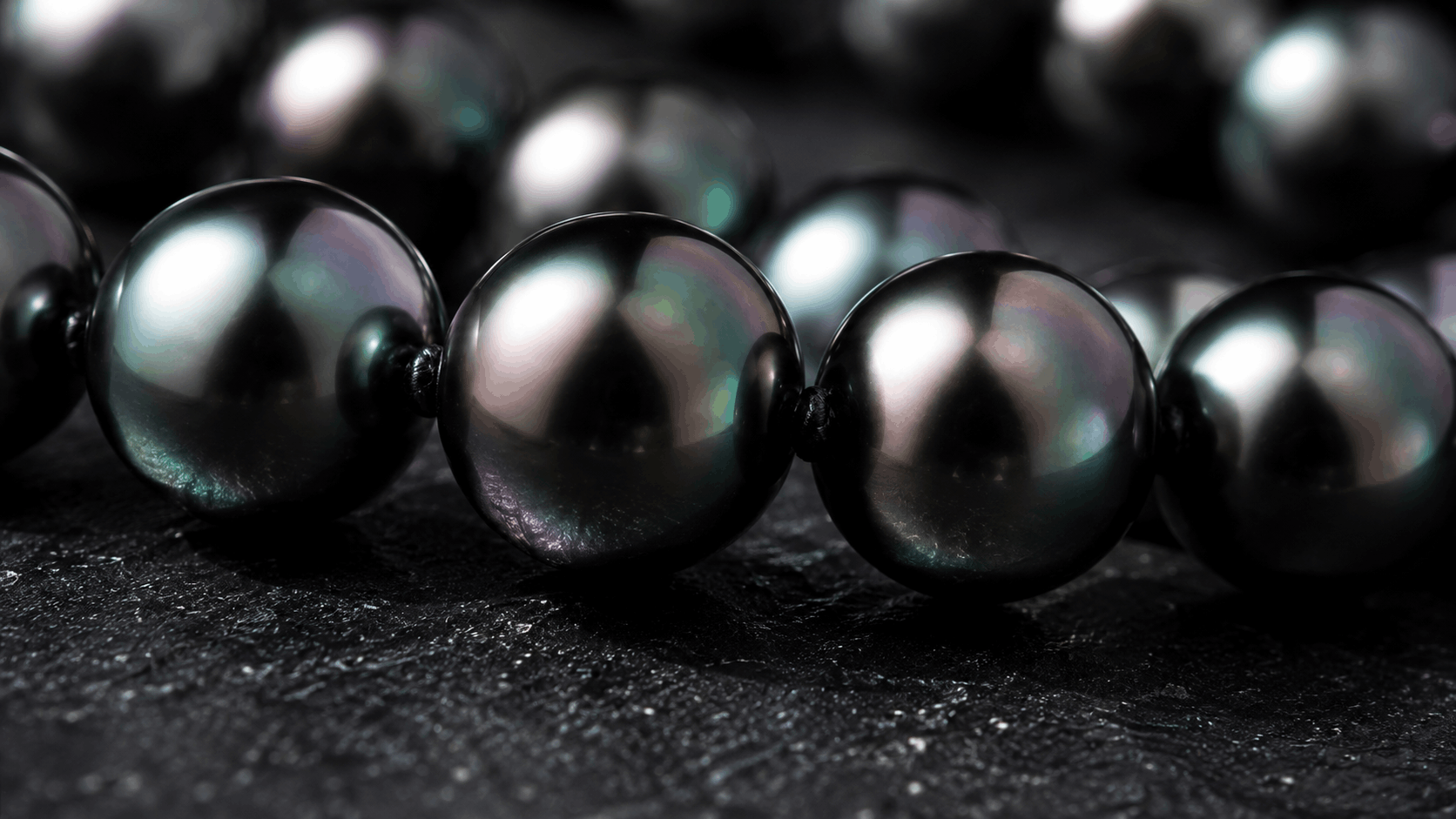
Surface quality comes next. AAA grade means near-flawless surface across every pearl — minimal imperfections only visible under magnification. AA has minor marks visible only under close inspection but still looks genuinely beautiful in wear. And shape matters too. Perfectly round Tahitian pearls are the rarest and most valuable. But near-round, oval and drop shapes in high luster grades are often exceptional pieces — and more accessible in price without sacrificing the luster quality that defines the category.
Matched vs Graduated — Two Different Looks
Two main configurations exist in Tahitian pearl necklaces — and the choice between them is worth understanding before buying. A matched strand uses pearls of uniform size from clasp to center. Every pearl the same diameter. Clean, contemporary, precise. So this configuration works particularly well in shorter choker and princess lengths where the uniform size creates a bold continuous line of dark pearls.
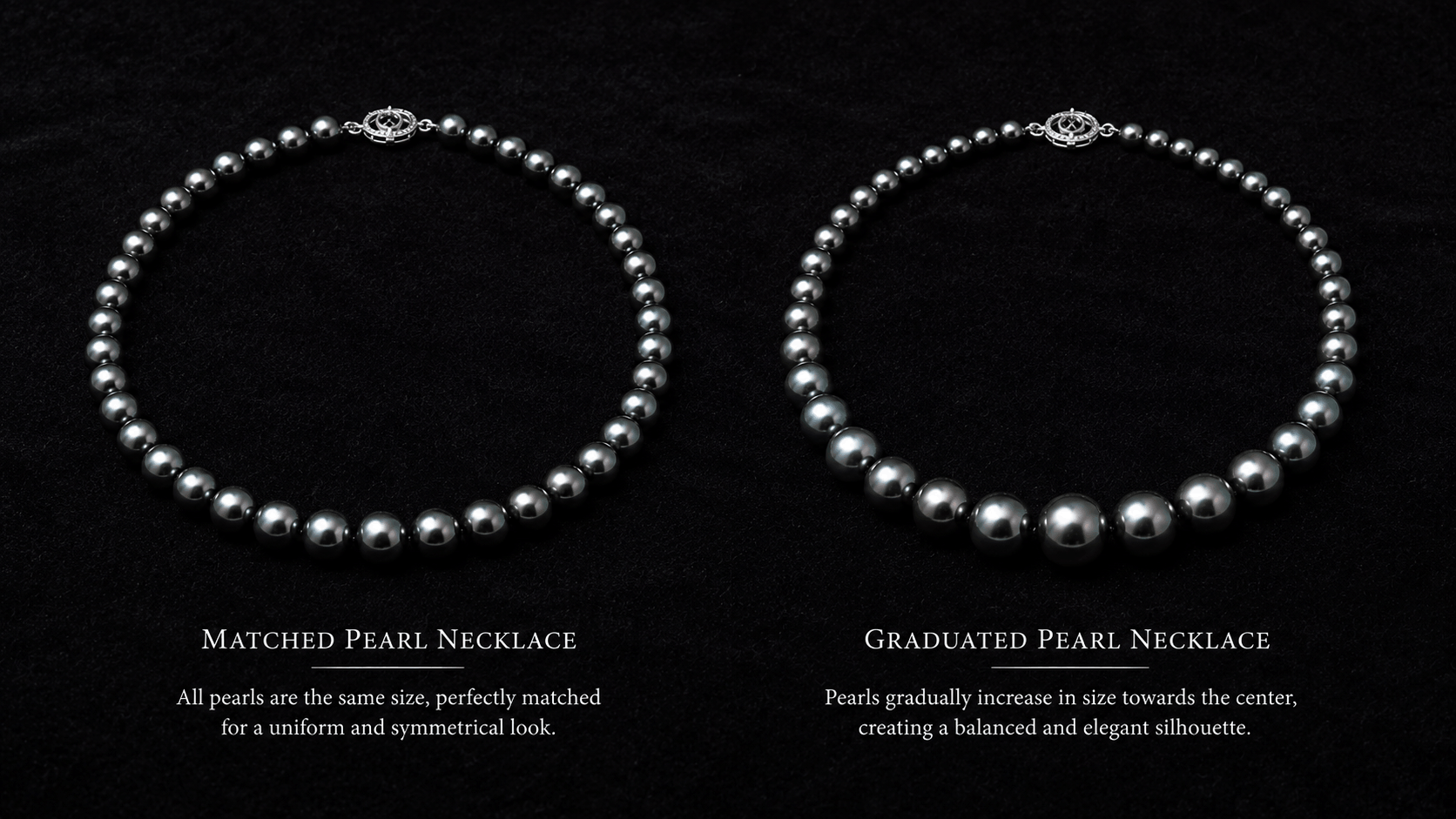
A graduated strand, on the other hand, uses pearls that increase in size from the clasp pearls toward the center — typically varying by 1mm to 2mm across the strand. The largest pearl sits at the center where it naturally draws the eye. This configuration creates a more classic, traditional look and works beautifully at princess and matinee lengths. Plus it’s often the better value option — slightly less demand on overtone consistency allows more flexibility in sourcing at equivalent price points.
How to Style a Tahitian Pearl Necklace
The styling approach that consistently works best is simpler than most buyers expect. Keep everything else simple and let the dark pearls lead. Clean neutral backgrounds — white, ivory, cream, navy, charcoal — give the overtones room to read properly. Competing colors or busy prints, on the other hand, dilute the effect of the dark pearl color considerably.
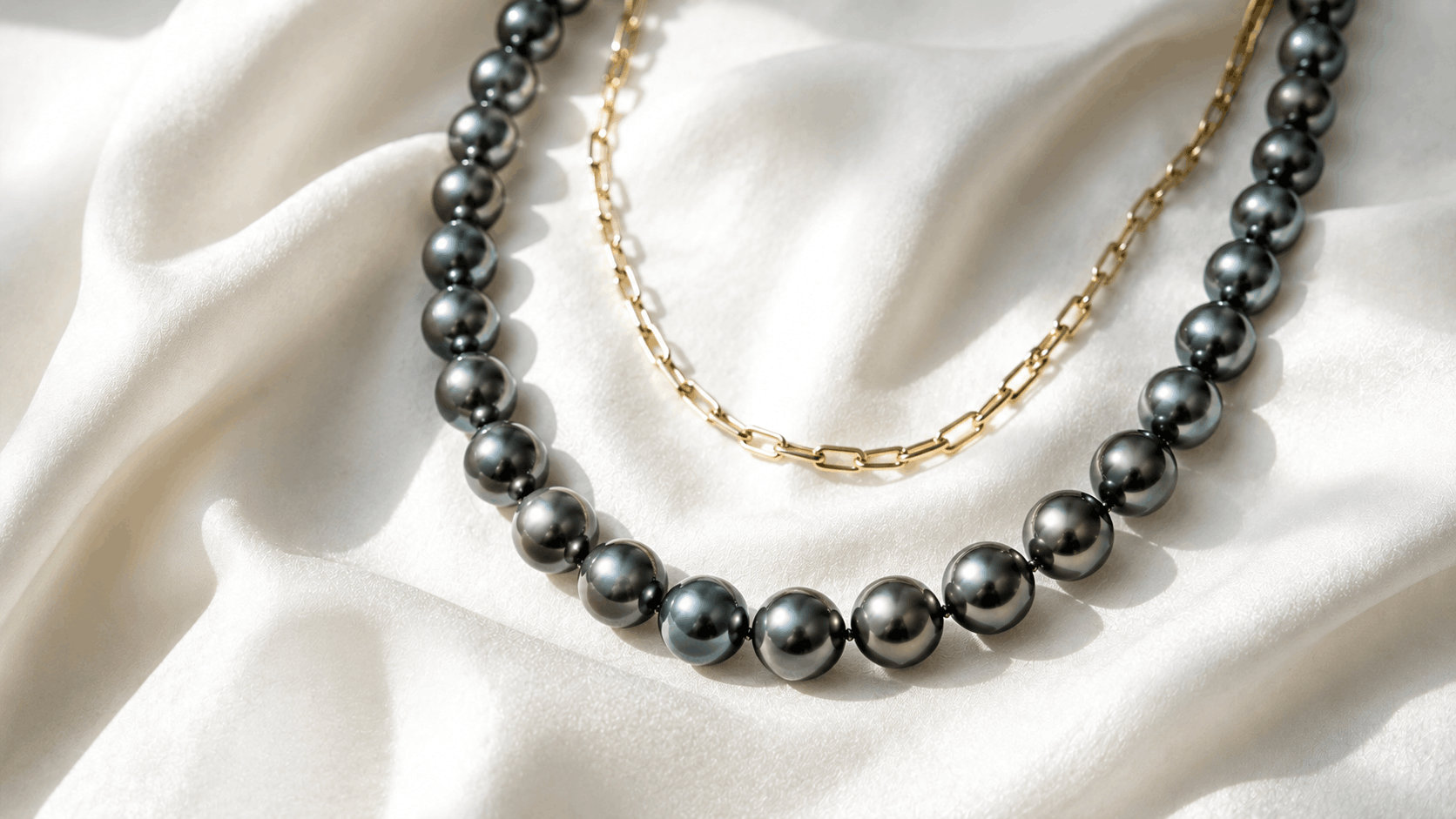
For everyday wear — a Tahitian pearl necklace at princess length over a white shirt or black turtleneck is effortlessly striking. No other jewelry needed. For formal occasions — the same strand over a simple dark dress creates a presence that reads as immediately considered and luxurious. And for layering — a Tahitian pearl necklace at 20 inches paired with a shorter delicate gold chain at 16 inches creates a contemporary two-layer look where the dark pearl leads and the warm metal provides contrast. So keep the second piece minimal. The Tahitian pearl strand does the work.
How to Buy a Tahitian Pearl Necklace the Right Way
A few things are non-negotiable when buying at this level. First — always verify origin as genuine French Polynesian Tahitian pearl production. Because the farming environment, the oyster species and the French Polynesian government’s minimum nacre thickness regulations are specific and they matter to what you’re actually buying. Second — luster and surface grade should be explicitly documented. Not just “high quality” as a marketing phrase. The actual grade stated clearly and verifiably.
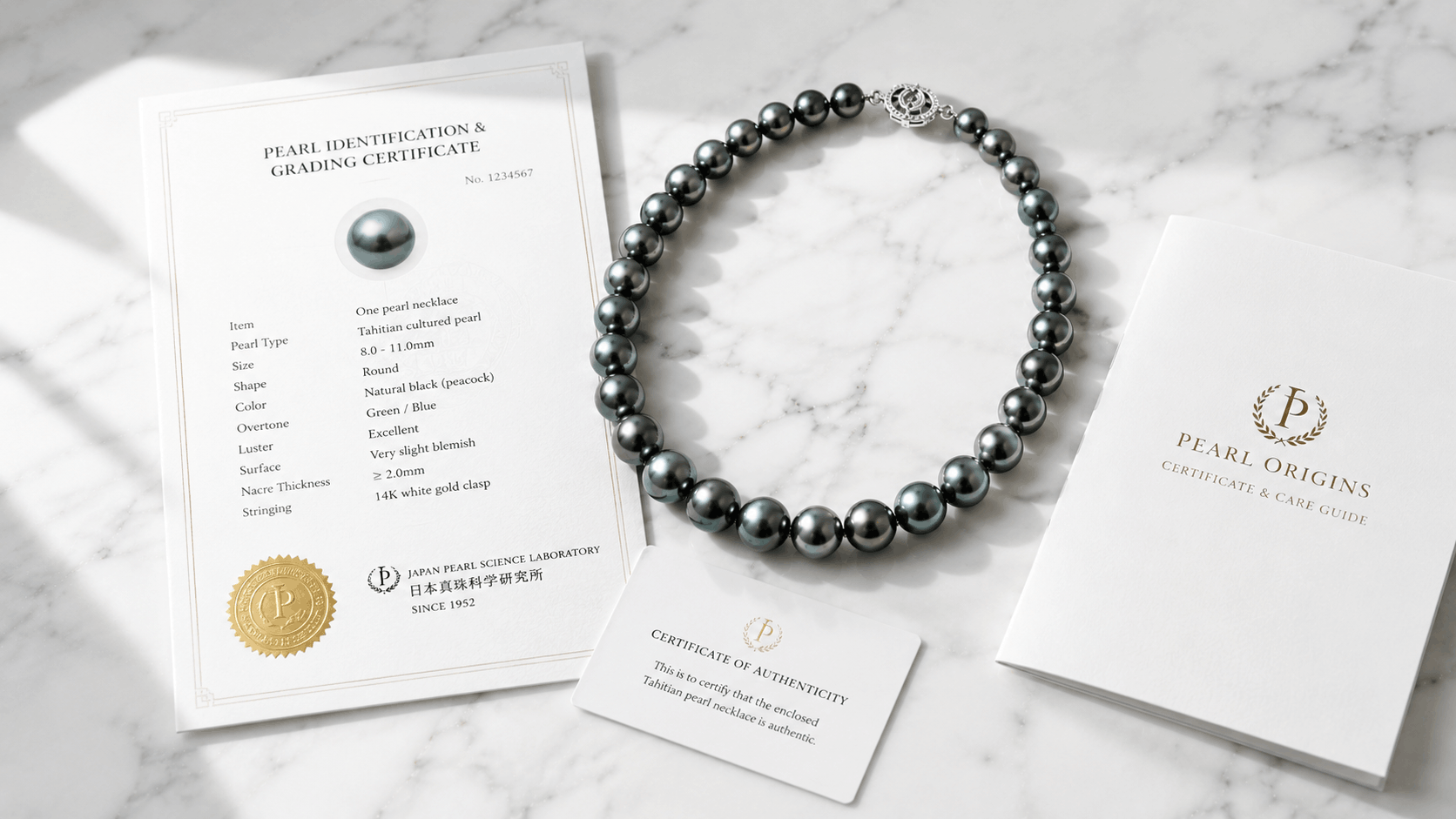
Third — check overtone consistency across the full strand in natural light. Because indoor store lighting flatters everything and can obscure inconsistencies that become visible outdoors. And fourth — always check the return policy. Minimum 30 days should be standard. At PearlsOnly every Tahitian pearl necklace comes with full grading documentation and a 90-day return guarantee — so you assess the piece properly in real lighting before fully committing. Browse the full Tahitian collection and find the strand that genuinely stops you.
