
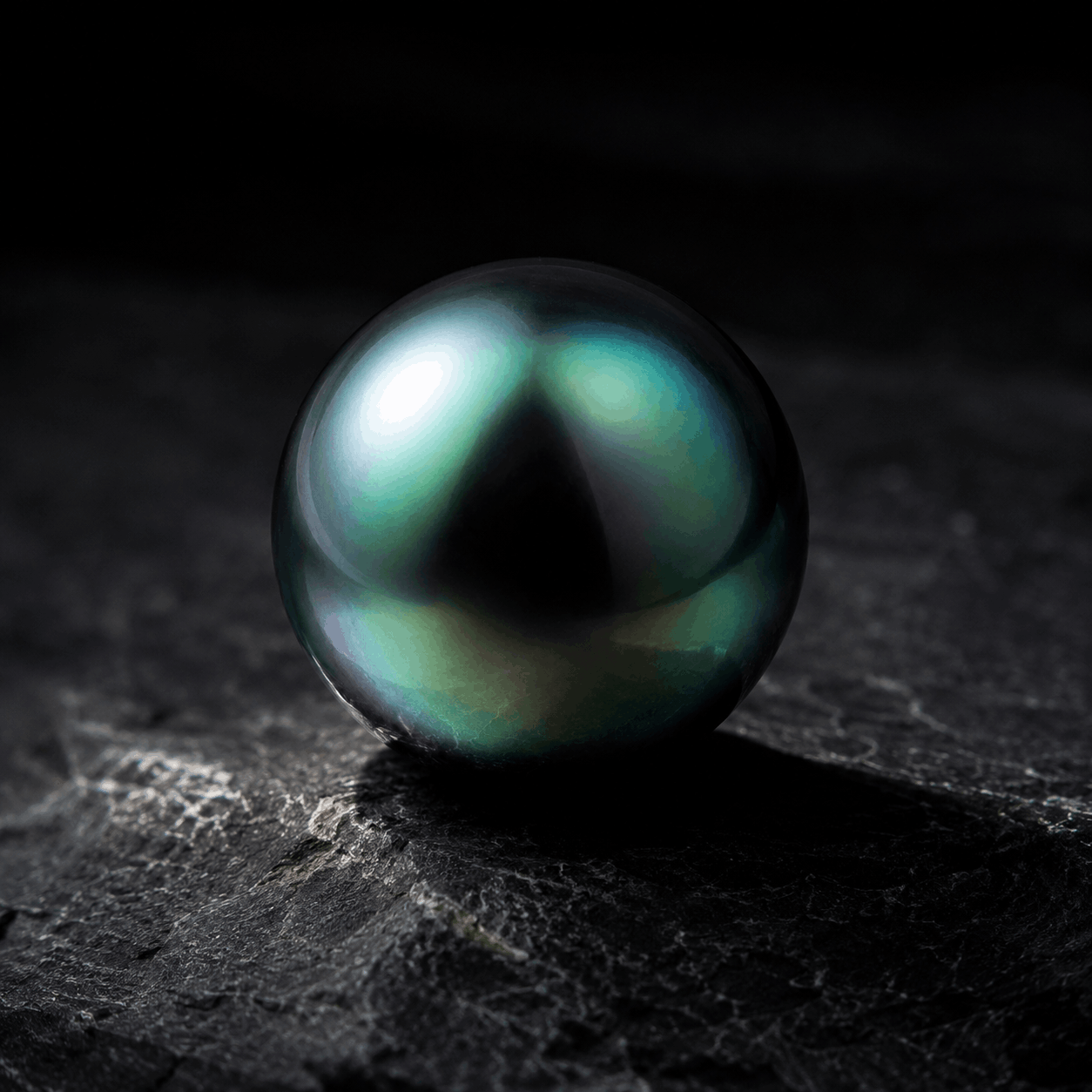
First time I held a Tahiti black pearl I expected it to be black. Just black. What I got instead was a dark grey surface with a green-gold shimmer running across it that shifted every time I tilted it toward the light. It was like holding something alive. That’s the thing about Tahiti black pearls that photographs can’t quite capture — the color isn’t flat, it isn’t static and it isn’t really black at all. So here’s everything worth knowing about what they actually are, where they come from and how to buy one well.
What Are Tahiti Black Pearls
Tahiti black pearls are cultured pearls produced by the Pinctada margaritifera oyster — the black-lipped pearl oyster — farmed in the lagoons and atolls of French Polynesia. The “black” in the name refers to the dark body color of the pearl, which ranges from light grey through dark grey to near-black. But that dark color is entirely natural. No dye. No irradiation. No treatment after harvest. So what you’re looking at is what the oyster produced — genuinely one of the rarest natural pearl colors in the world.
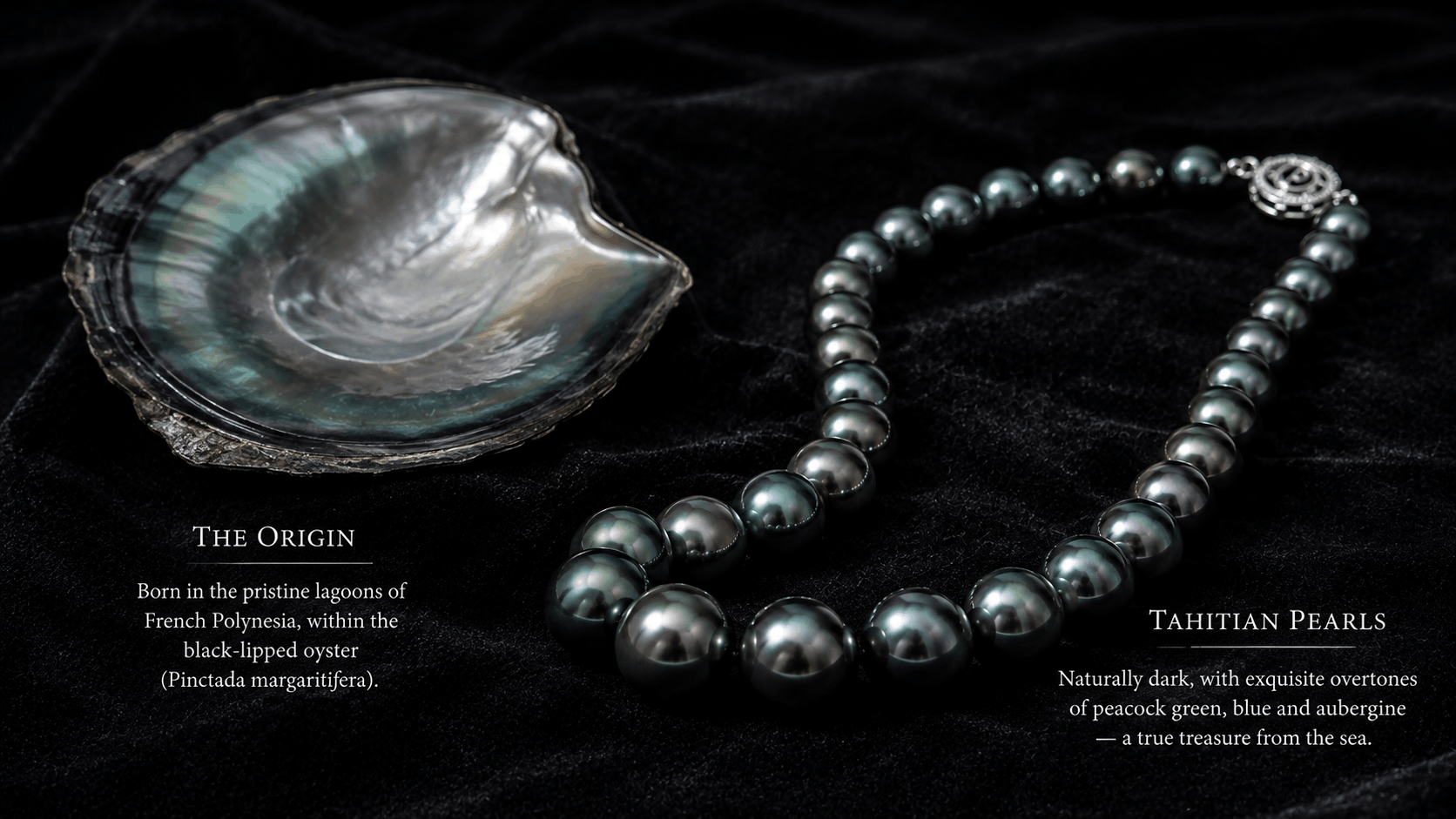
French Polynesia — specifically the islands of Tahiti, Rangiroa, Fakarava and Manihiki — is the only place in the world where the Pinctada margaritifera thrives naturally at scale. And the French Polynesian government enforces strict minimum nacre thickness standards for exported pearls. So genuine Tahiti black pearls carry real structural quality built into the supply chain from the start. That regulatory framework is one of the reasons top-grade Tahitian pearls are consistently exceptional — and why the “Tahitian” designation carries real meaning beyond just a marketing term.
Why Tahiti Black Pearls Aren’t Actually Black
This is the thing that surprises most first-time buyers. Tahiti black pearls aren’t black. Not truly. The body color is dark — grey to near-black — but what makes them extraordinary is the overtone layer sitting over that dark base. And overtone is where Tahiti black pearls become genuinely unlike anything else in fine jewelry.
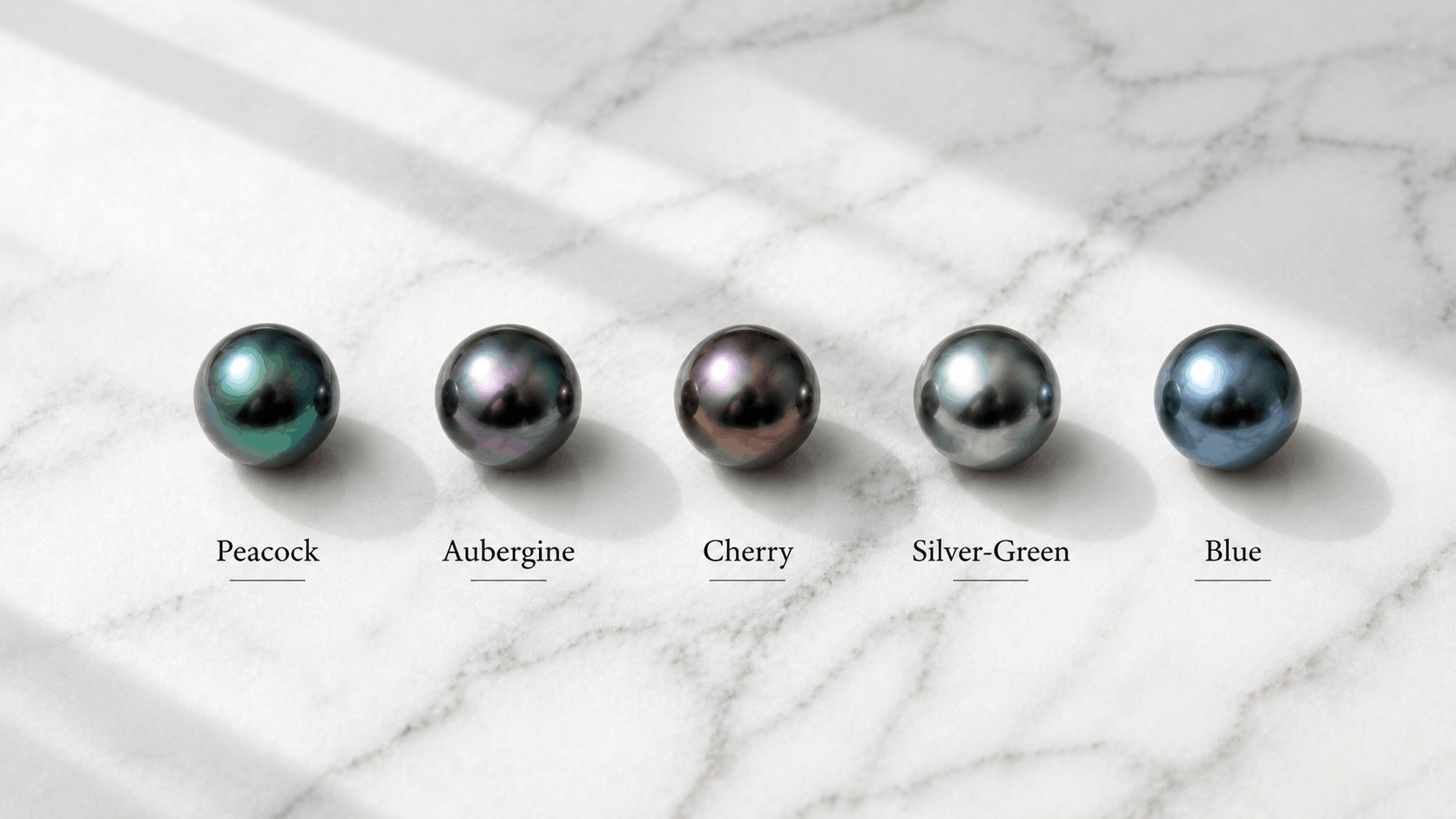
Peacock overtone is the most celebrated. A green-gold iridescence over dark grey that shifts between green, gold and bronze depending on the angle and light source. It’s the overtone most associated with the finest Tahitian pearls and the one that commands the highest prices. Aubergine runs deep purple-violet over the dark base — extraordinarily luxurious and particularly striking in evening jewelry. Cherry adds a reddish-rose warmth that’s rarer than peacock and especially beautiful against warm skin tones. Silver-green is the most classic and widely available direction — less dramatic than peacock but genuinely elegant and very wearable. And blue overtone — cool, steely and contemporary — is one of the more unusual and sought-after directions in the current market. So Tahiti black pearls aren’t a single color. They’re a family of dark pearls with dramatically different overtone personalities.
Tahiti Black Pearls vs Dyed Black Pearls
This distinction is critical — and it’s the one most buyers get wrong before they understand the category properly. Genuine Tahiti black pearls have a naturally dark body color produced by the Pinctada margaritifera oyster. But dyed black pearls — typically dyed freshwater pearls or dyed Akoya pearls — are white or light-colored pearls that have been treated after harvest to achieve a dark color.
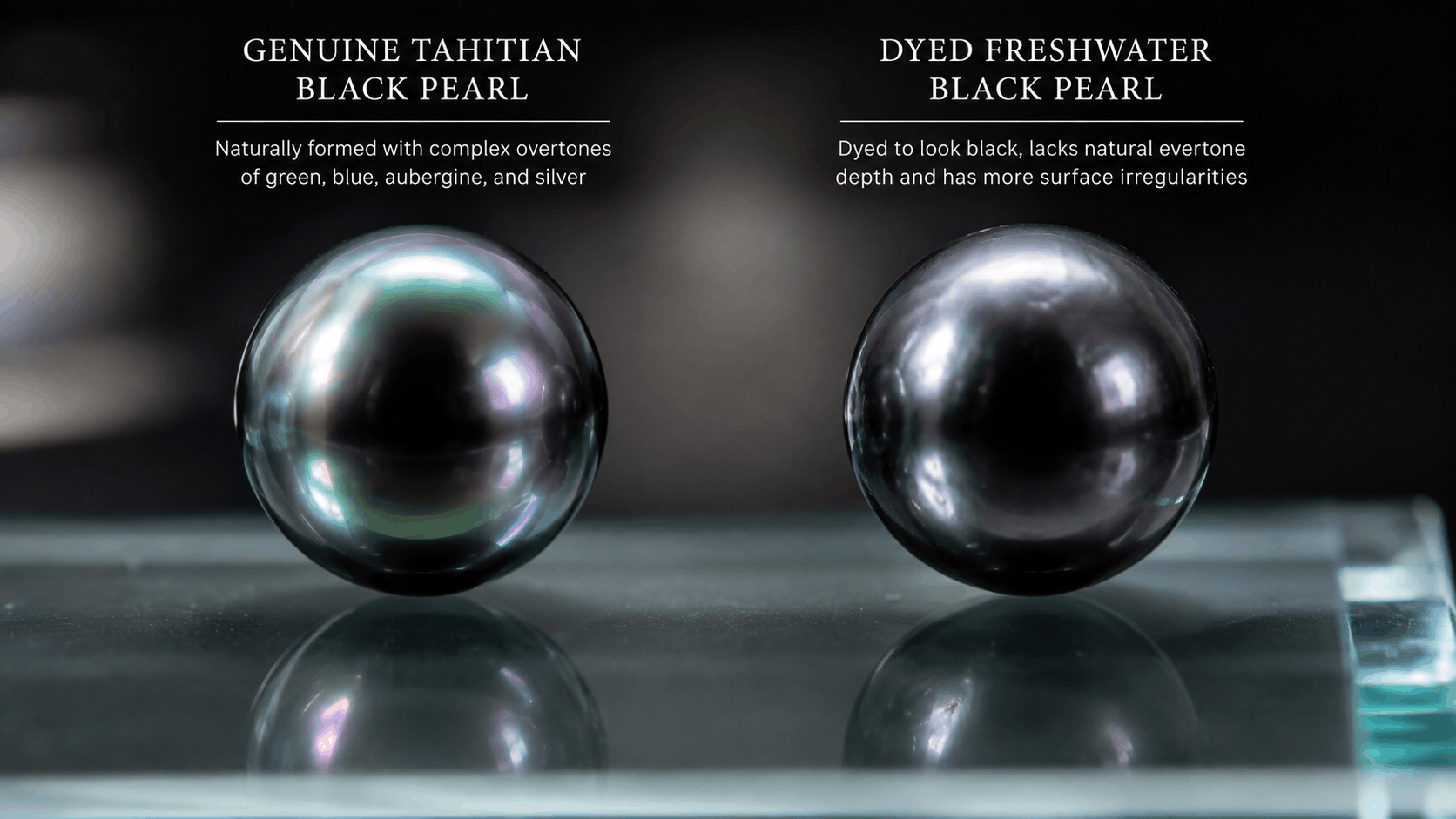
Both are real pearls with real nacre. But they’re not the same product. Dyed black pearls have a flat, uniform color with no natural overtone complexity — the dark is applied, not grown, so it sits on the surface rather than moving through the nacre. Genuine Tahiti black pearls have those extraordinary natural overtones because the color comes from within the nacre structure itself. Side by side the difference is immediately obvious under natural light. The dyed pearl looks uniformly dark. The genuine Tahitian pearl looks alive. So always ask explicitly — is the color natural or treated? Any reputable seller answers that clearly and without hesitation.
Size and Shape — More Variety Than You’d Expect
Tahiti black pearls run significantly larger than most other pearl types. The typical size range runs from 8mm to 18mm, with most quality commercial production sitting between 9mm and 13mm. At those sizes the overtones become fully visible and the satiny luster has real surface area to express itself. Smaller than 8mm is unusual for genuine Tahitian production — if you see “Tahitian pearls” below 8mm at very low prices, treat that with skepticism.
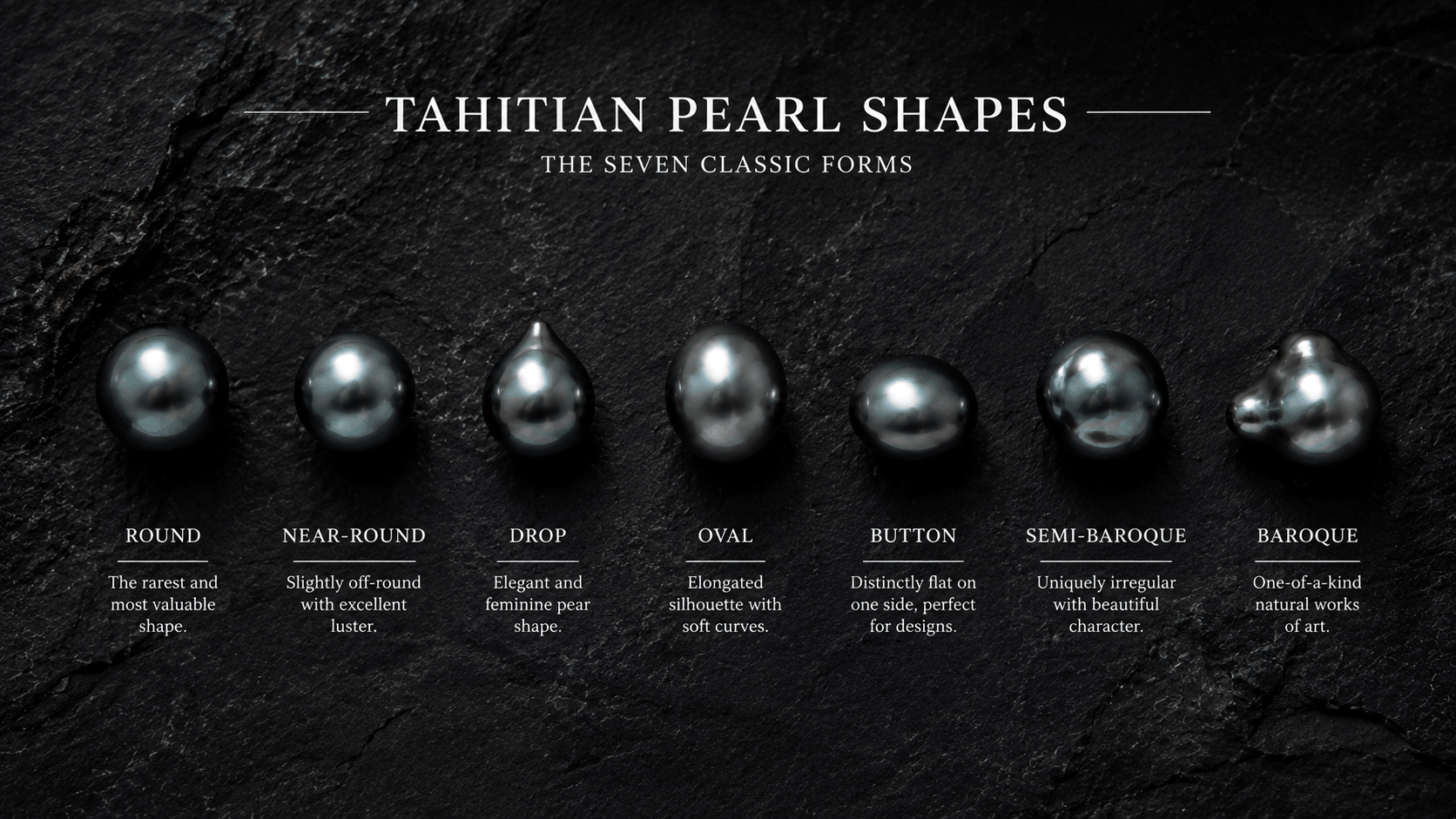
Shape ranges from perfectly round through near-round, oval, button, drop, semi-baroque and fully baroque. And honestly, shape is where Tahiti black pearls offer more genuine choice than most pearl types. Round Tahitian pearls are the rarest and most expensive — getting the black-lipped oyster to produce a geometrically perfect sphere is genuinely difficult. But drop-shaped Tahiti black pearls in earring and pendant settings are extraordinarily beautiful — the tapered point hangs naturally and catches light with every movement. And baroque Tahitian pearls — freeform irregular shapes with complex surface character — are one of the strongest jewelry trends right now. Each one unique. Each one genuinely unlike anything else.
Quality Grades for Tahiti Black Pearls
Quality grading matters enormously in Tahiti black pearls — and the stakes are higher here than in most pearl categories because the price points are significant. Luster is the first and most important factor. Top-grade Tahiti black pearls show a deep mirror-like luster across the full surface. Almost like the light comes from inside the pearl rather than bouncing off it. Lower grade pearls look dull or flat — the color is there but the life isn’t. And in dark pearls, flat luster shows more obviously than in white pearls where the brightness of the color compensates somewhat.
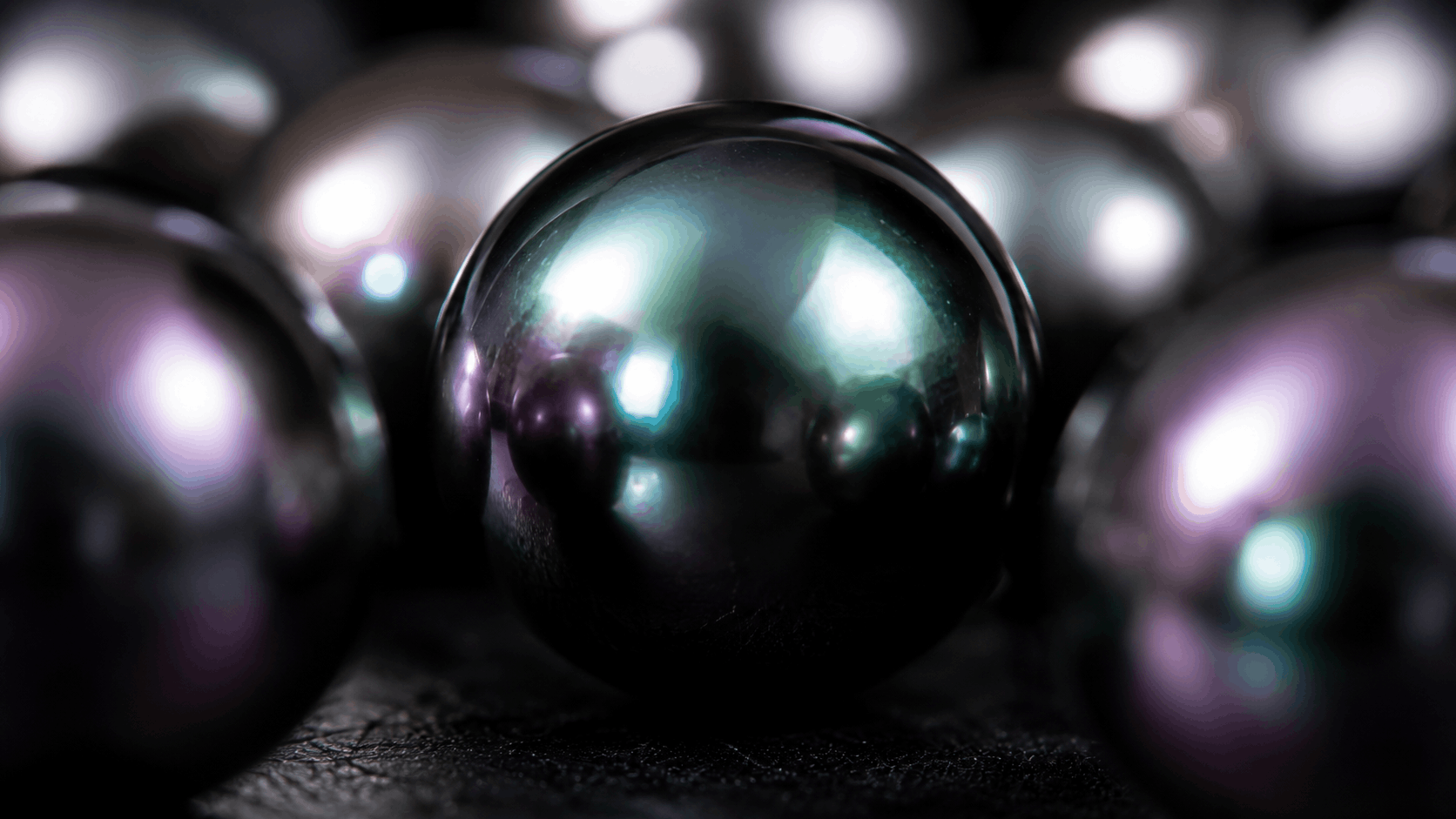
Surface quality runs from AAA — near-flawless, minimal imperfections visible only under magnification — through AA and A grades with increasingly visible surface marks, bumps and irregularities. For Tahiti black pearl jewelry at investment level, AA is the practical minimum and AAA is the benchmark worth targeting. Nacre thickness is regulated in French Polynesia at a minimum of 0.8mm for export — but top-grade Tahitian pearls typically carry 1.5mm to 3mm of nacre. That thickness is what produces the deep luster and what ensures the pearl ages beautifully over decades rather than dulling as thinner nacre wears away.
Tahiti Black Pearl Jewelry — What’s Worth Buying
Tahiti black pearls work beautifully across every jewelry category — and the dark color with natural overtones creates specific styling opportunities that white pearl types simply don’t have.
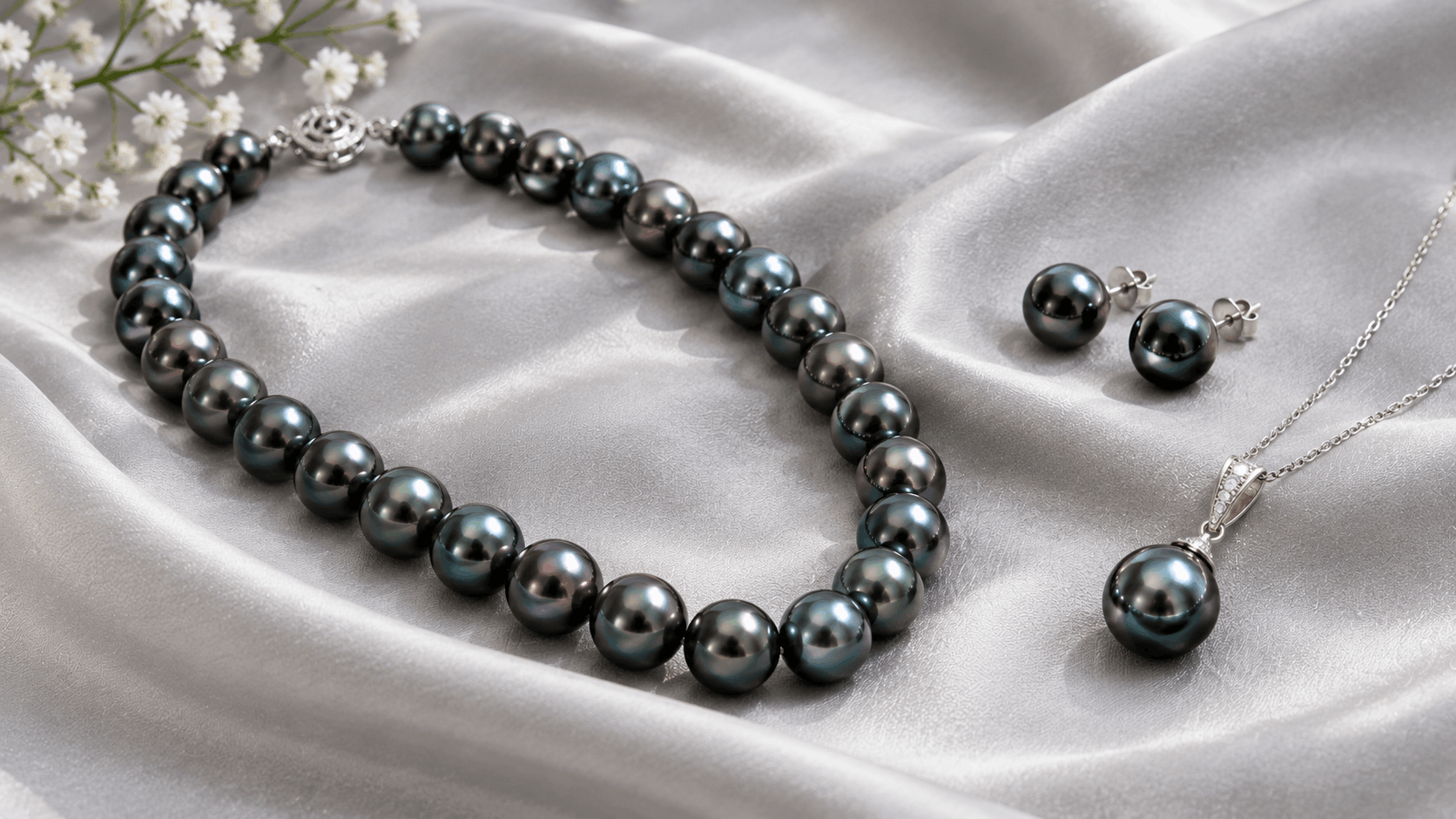
A Tahiti black pearl necklace is the centerpiece of the category. A matched strand of 10mm to 12mm peacock pearls is one of the most dramatic and distinctive pieces in fine jewelry — dark, dimensional and unlike anything else at the price point. Tahiti black pearl earrings — studs or drops — are the most accessible entry point. A pair of 9mm Tahitian stud earrings with strong luster turns any outfit into something considered. And a single Tahiti black pearl pendant — one exceptional round or drop pearl on a fine gold chain — is one of the most elegant fine jewelry pieces available at any price point. One pearl. One chain. Enough.
How to Care for Tahiti Black Pearls
Tahiti black pearls are saltwater pearls with thick nacre — genuinely robust compared to freshwater alternatives. But basic care matters significantly at this price point. So the rule applies across all pearl jewelry: put pieces on last when getting ready and take them off first. Perfume, hairspray and cosmetics dull nacre over time. And the natural dark color of Tahitian pearls means any surface dulling shows more obviously than it would on a white pearl.
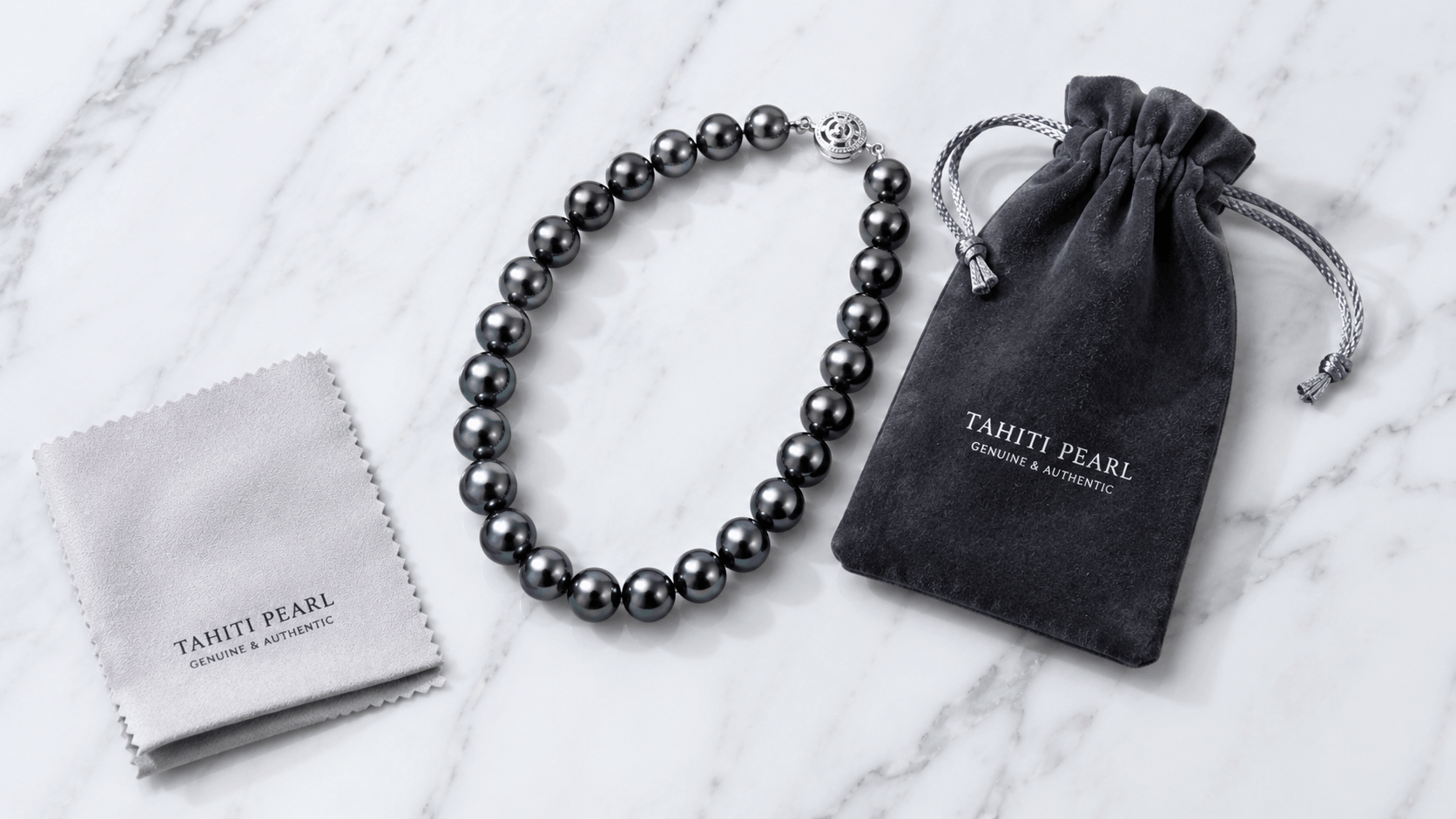
Wipe gently with a soft damp cloth after wearing. Then store separately from harder jewelry — diamonds and sapphires scratch nacre easily even through brief contact in a jewelry box. A soft pouch or lined compartment is all that’s needed. And get strands restrung every few years if worn regularly. Silk thread weakens quietly and a broken strand of Tahiti black pearls is a genuinely heartbreaking situation. Basic care. Decades of beauty. That’s the whole story.
