
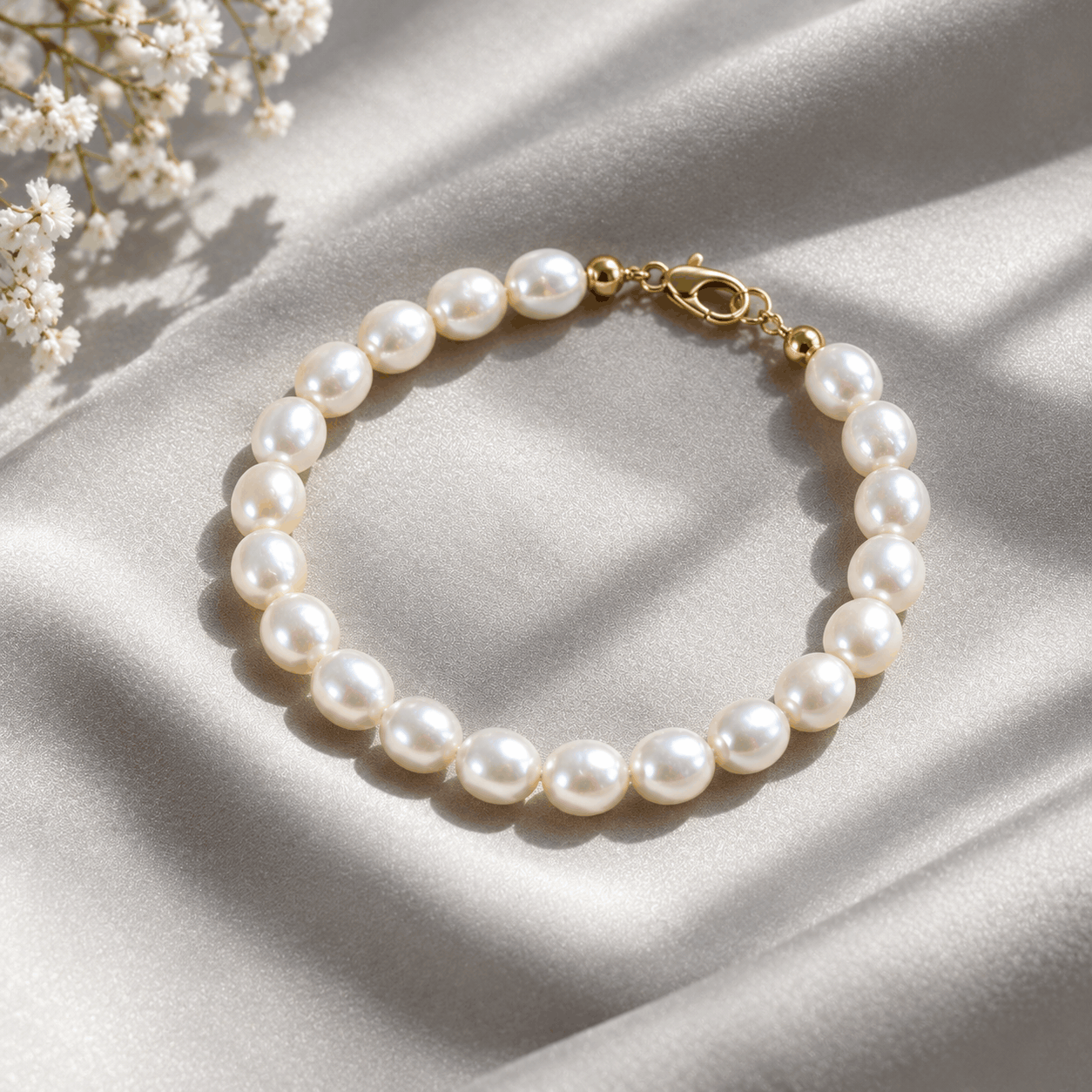
Searching for “pearl bracelet freshwater” and wondering which style to choose? Start with pearl quality, wrist fit and the way you plan to wear it. A freshwater pearl bracelet features real cultured pearls grown in freshwater mussels. However, pearl size, stringing and the clasp all affect the finished piece.
Start with the way you plan to wear it. A small single strand can work with an everyday wardrobe, while larger pearls or multiple strands create a more prominent look. This guide explains what to compare before ordering, from pearl size and grading to care and gift sizing.
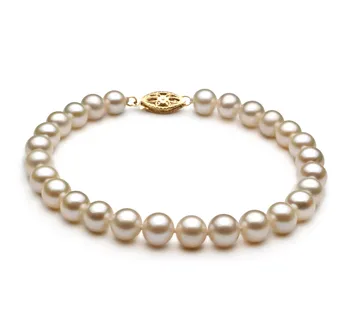
What are freshwater pearls?
Freshwater cultured pearls grow in mussels with human assistance. They are real pearls, unlike imitation beads with a pearl-like coating. “Cultured” describes how pearl growth begins; it does not mean artificial.
Many traditional freshwater pearls are tissue-nucleated and consist largely of nacre. However, bead-nucleated freshwater pearls also exist, so not every freshwater pearl has the same internal structure. The GIA guide to pearl types explains these distinctions.
For a purchase, look for a clear description of pearl type, size, shape and any disclosed treatments. Color and shine alone cannot establish authenticity.
Pearl Bracelet Freshwater: Comparing Prices and Features
Compare bracelets with similar specifications before deciding which offers the best value. A change in grade, pearl diameter, strand length or clasp can change the total. The following examples provide a starting point from the white freshwater pearl bracelet collection.
| Bracelet | Seller’s grade | Listed price | Base clasp material |
|---|---|---|---|
| White 6–7 mm freshwater bracelet | AA | $99 | Gold-filled |
| White 6–7 mm freshwater bracelet | AAA | $134 | Gold-filled |
| White 7–8 mm freshwater bracelet | AAAA | $215 | Gold-filled |
These are listing snapshots, not guaranteed quotes. Check the product page for current pricing and availability. Your selected length, clasp upgrades, taxes and shipping may change the total. The first two examples let you compare different seller grades at the same pearl size. However, the third changes both size and grade. Its price difference does not isolate the effect of either factor.
How to Check Freshwater Pearl Bracelet Quality
GIA identifies seven pearl value factors: size, shape, color, luster, surface quality, nacre quality and matching. Use them together rather than judging a bracelet by diameter alone.
- Luster: Compare the clarity and intensity of reflections under similar lighting. A brighter photograph does not automatically mean a better pearl.
- Surface: Look for visible blemishes and ask for close-ups where the listing does not show enough detail.
- Shape: Decide whether you prefer a regular outline or deliberately irregular baroque pearls.
- Matching: In a uniform strand, check whether size, shape, color and luster look consistent. Multicolor designs can vary intentionally.
- Nacre: Read the seller’s description; internal structure and nacre thickness are not reliably established from a photograph.
- Size and color: Choose these for your preferred appearance while considering the other quality factors.
What do AA, AAA and AAAA mean?
Read the grading definitions used by the seller instead of treating a letter grade as a complete description. PearlsOnly publishes an AAAA grading system that considers individual factors and assigns the overall grade according to the lowest factor. Its freshwater pearl grading guide provides the relevant criteria.
Next, inspect the clasp, metal specification, stringing and knots. Gold-filled, sterling silver and solid gold are different materials. Therefore, check the selected clasp carefully, especially if the wearer has a known metal sensitivity.
Pearl Bracelet Freshwater: Choosing Your Size
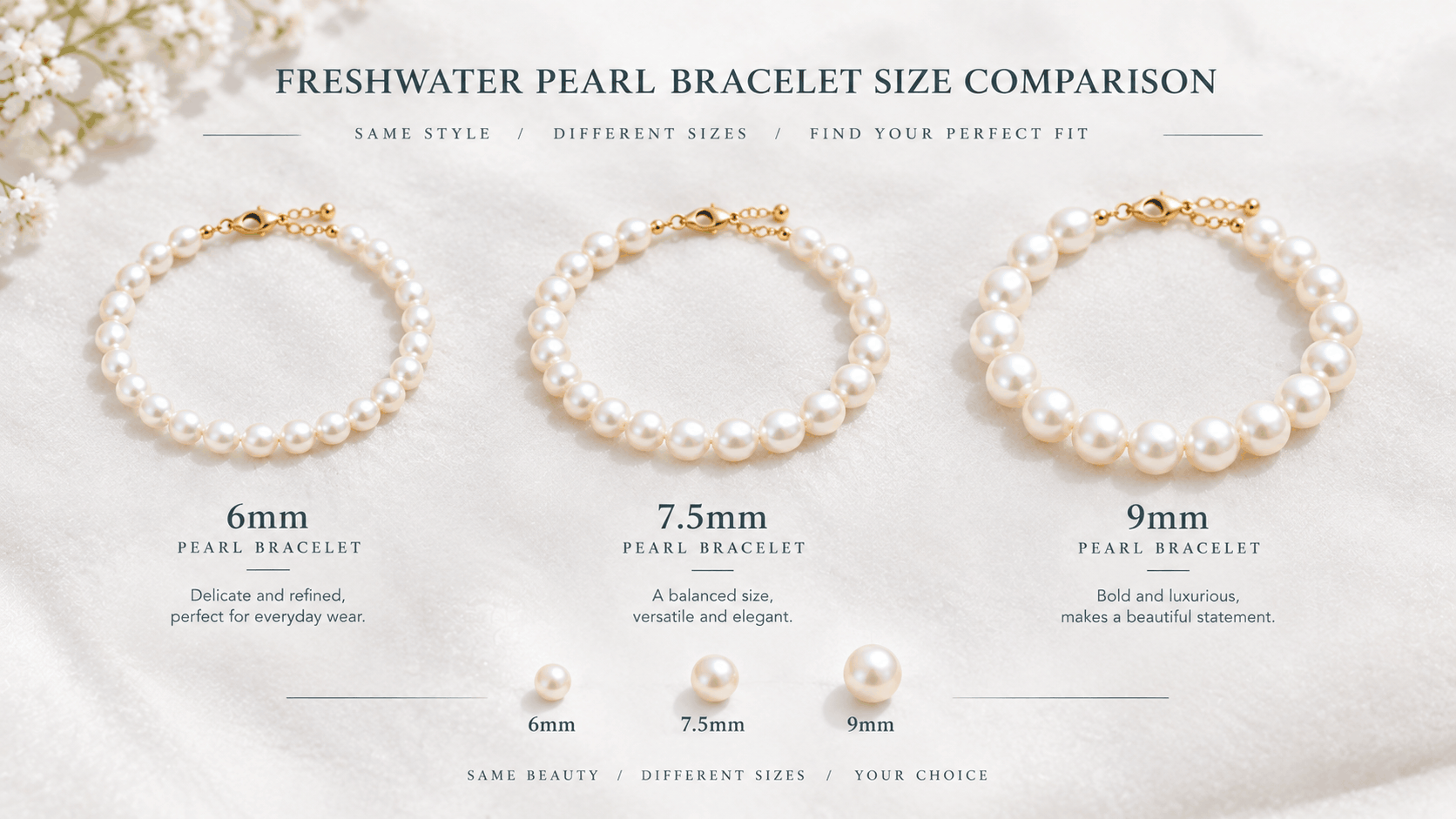
First, separate pearl diameter from bracelet length. Pearl size describes the diameter in millimeters. Bracelet length describes the finished jewelry. You need both measurements to judge fit.
| Pearl diameter | Visual effect | When to consider it |
|---|---|---|
| 5–6 mm | Small and understated | You prefer a delicate accessory |
| 7–8 mm | More noticeable without a very large profile | You want a versatile single strand |
| 9–10 mm and larger | Greater visual presence | You want the bracelet to be a focal point |
These are styling starting points, not rules based on age or wrist shape. Larger pearls also occupy more space inside the bracelet, so two strands with the same stated length may feel different.
How to measure your wrist
- Wrap a flexible measuring tape around the wrist where you want the bracelet to sit. Keep it comfortably against the skin.
- Record that wrist measurement without adding an allowance yet.
- Use the seller’s fit guidance to choose a finished length for a snug or loose fit. Confirm whether the stated length includes the clasp.
- If between sizes, ask the seller which length suits that pearl diameter and construction.
Do not assume a standard length fits everyone. For a gift, discreetly check a well-fitting bracelet of similar construction. Otherwise, confirm resizing and exchange options before ordering.
Pearl Bracelet Freshwater: Styles and Shapes
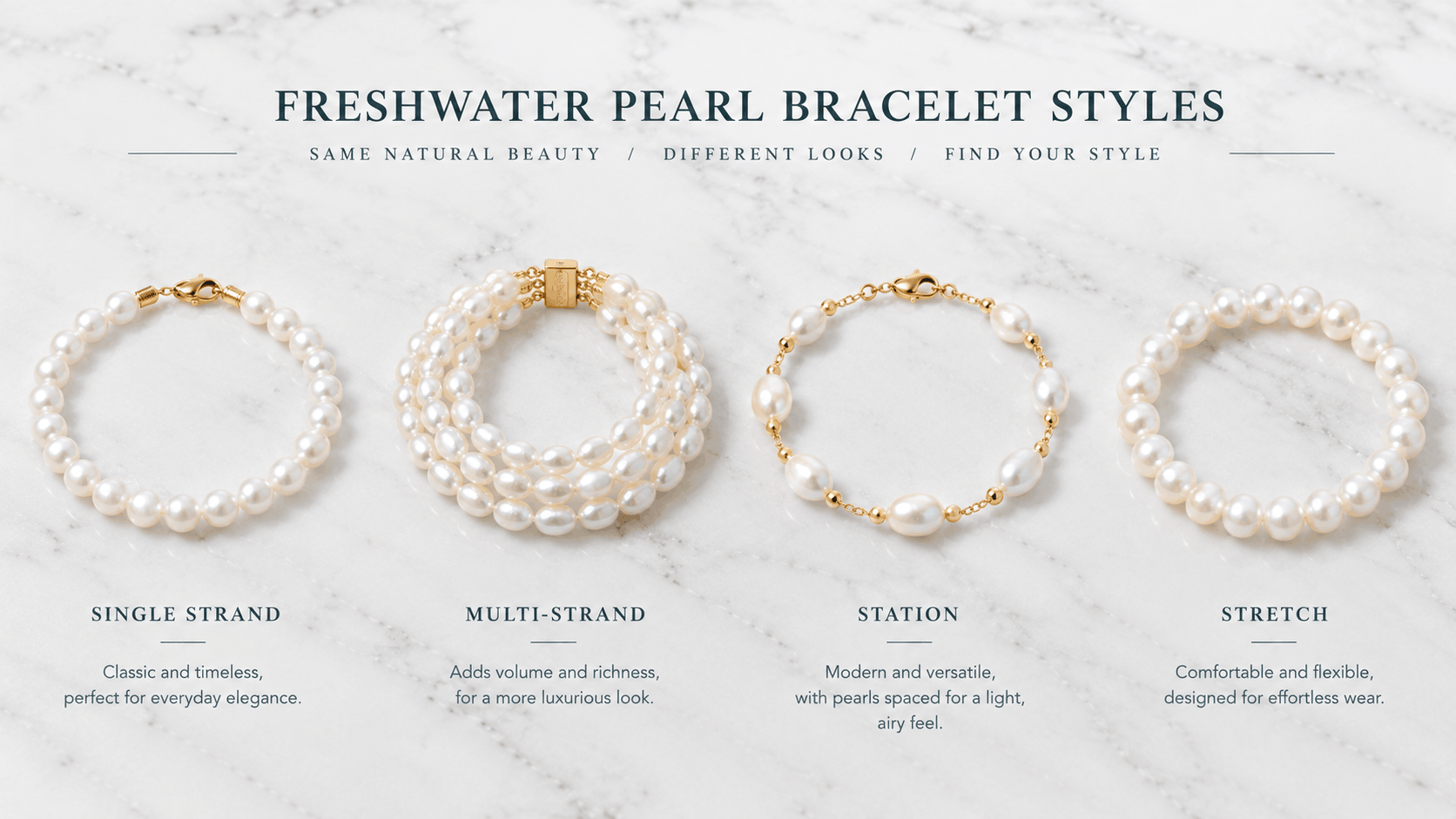
| Style | Appearance | Check before buying |
|---|---|---|
| Single strand | A continuous row of pearls | Matching, knots and clasp usability |
| Multi-strand | A fuller, layered appearance | Overall width, weight and how the strands sit |
| Station or chain | Pearls spaced along a chain | Chain metal, adjustable length and pearl attachments |
| Stretch | A strand without a clasp | Elastic condition, fit and restringing options |
Round pearls give a strand a regular outline. In contrast, baroque pearls create an irregular, sculptural effect. Shape preference is personal. An irregular pearl can be beautiful, while roundness alone does not establish overall quality.
Which Freshwater Pearl Bracelet Color Should You Choose?
Start with the wearer’s existing jewelry and clothing. White offers a neutral starting point; pink and peach bring warmer color, while lavender adds a cooler accent. These are styling suggestions rather than strict rules about which skin tones can wear which pearls.
Compare the white freshwater bracelets with the pink freshwater bracelets to narrow your preference. Alternatively, choose a multicolor design with subtle transitions or stronger contrast.
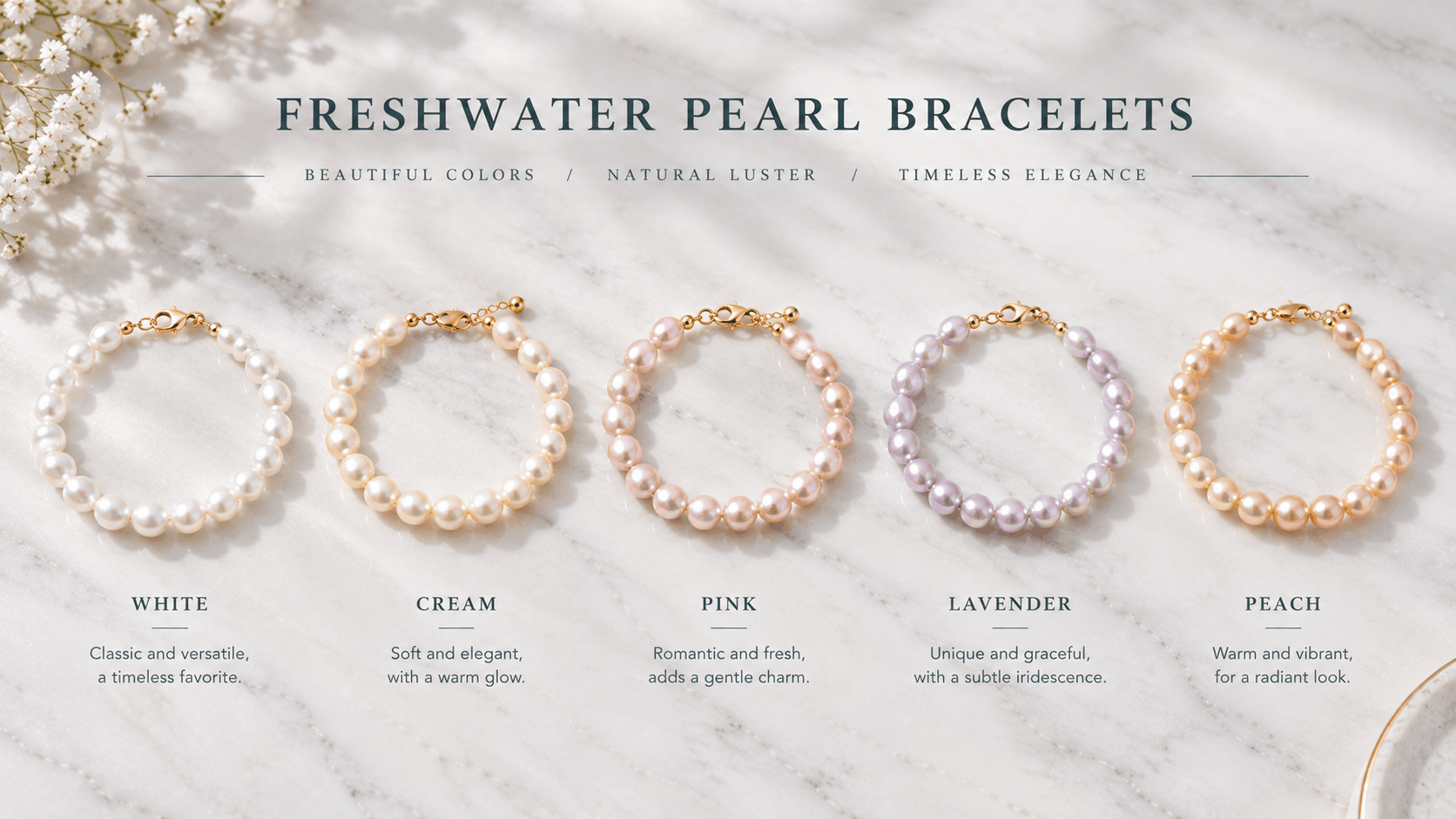
Ask whether the color is natural or treated, and read any treatment disclosure. For an existing necklace or earrings, request help matching the color rather than relying on photographs taken under different lighting.
Freshwater vs. Akoya: which bracelet suits you?
Freshwater and Akoya are different cultured pearl types. Freshwater pearls grow in freshwater mussels; Akoya pearls grow in saltwater oysters. Freshwater jewelry offers varied shapes and colors, while Akoya is especially associated with classic round strands and sharp luster. Individual quality varies within both types.
Compare actual bracelets, not just category names. If matching an existing Akoya necklace is your priority, start with Akoya options. If you want to explore varied shapes and colors, begin with freshwater designs. Neither type should be treated as scratch-proof everyday jewelry.
How to style a pearl bracelet without unnecessary wear
A single strand can finish a shirt-and-trousers outfit or complement a dress without other wrist jewelry. A station bracelet offers a lighter visual effect, while a wider multi-strand design can carry the look on its own.
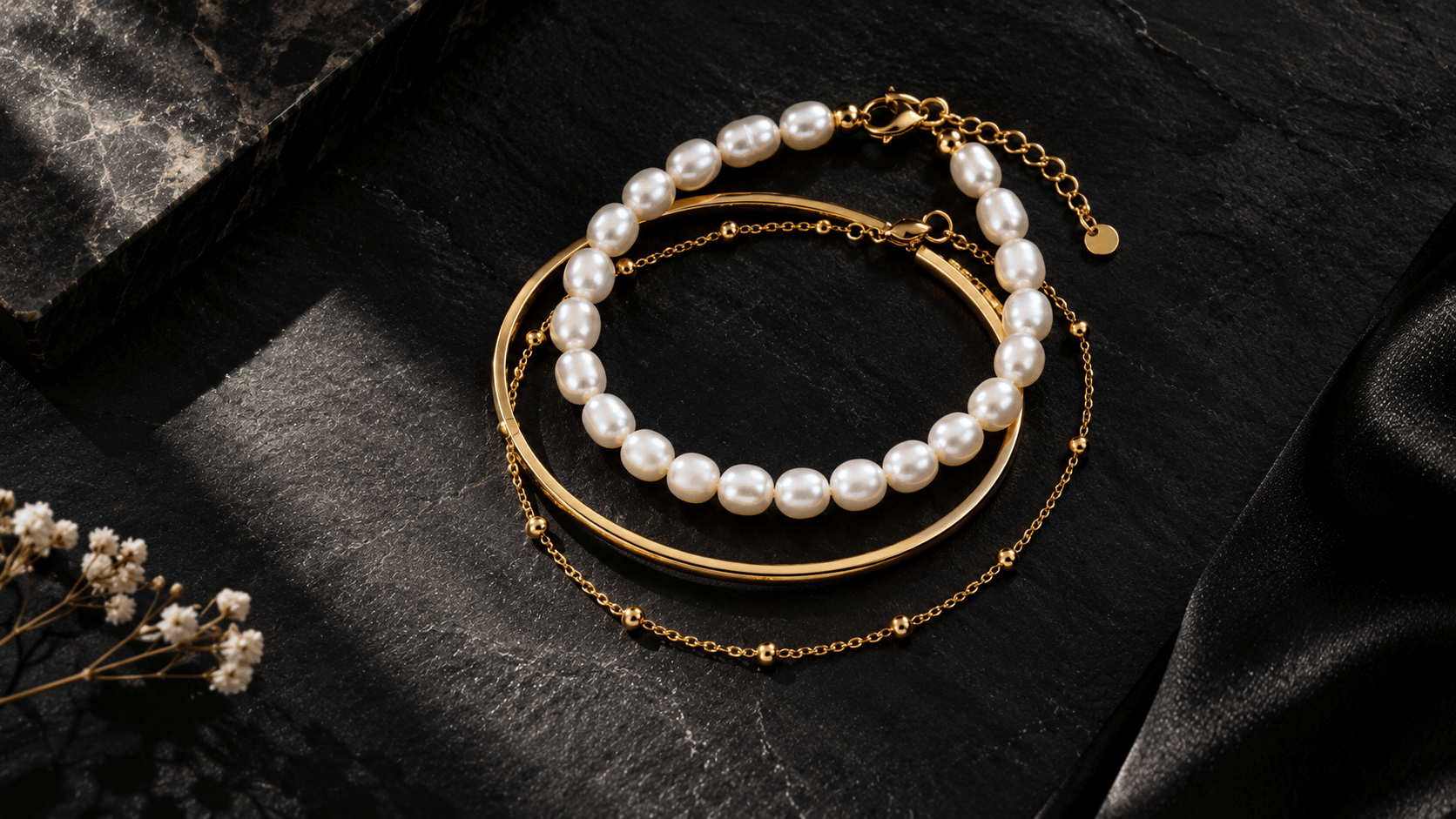
For stacking, avoid arrangements that repeatedly rub pearls against metal edges, watches or gemstone settings. Wearing the pearl bracelet on one wrist and harder jewelry on the other is a simple alternative. If pieces knock together during normal movement, change the arrangement.
Choosing a bracelet as a gift
Choose around the recipient’s preferences: the metal they wear, whether they like small or prominent jewelry, and how easily they can operate a clasp. For bridesmaids, coordinate a color or style while checking each person’s fit separately.
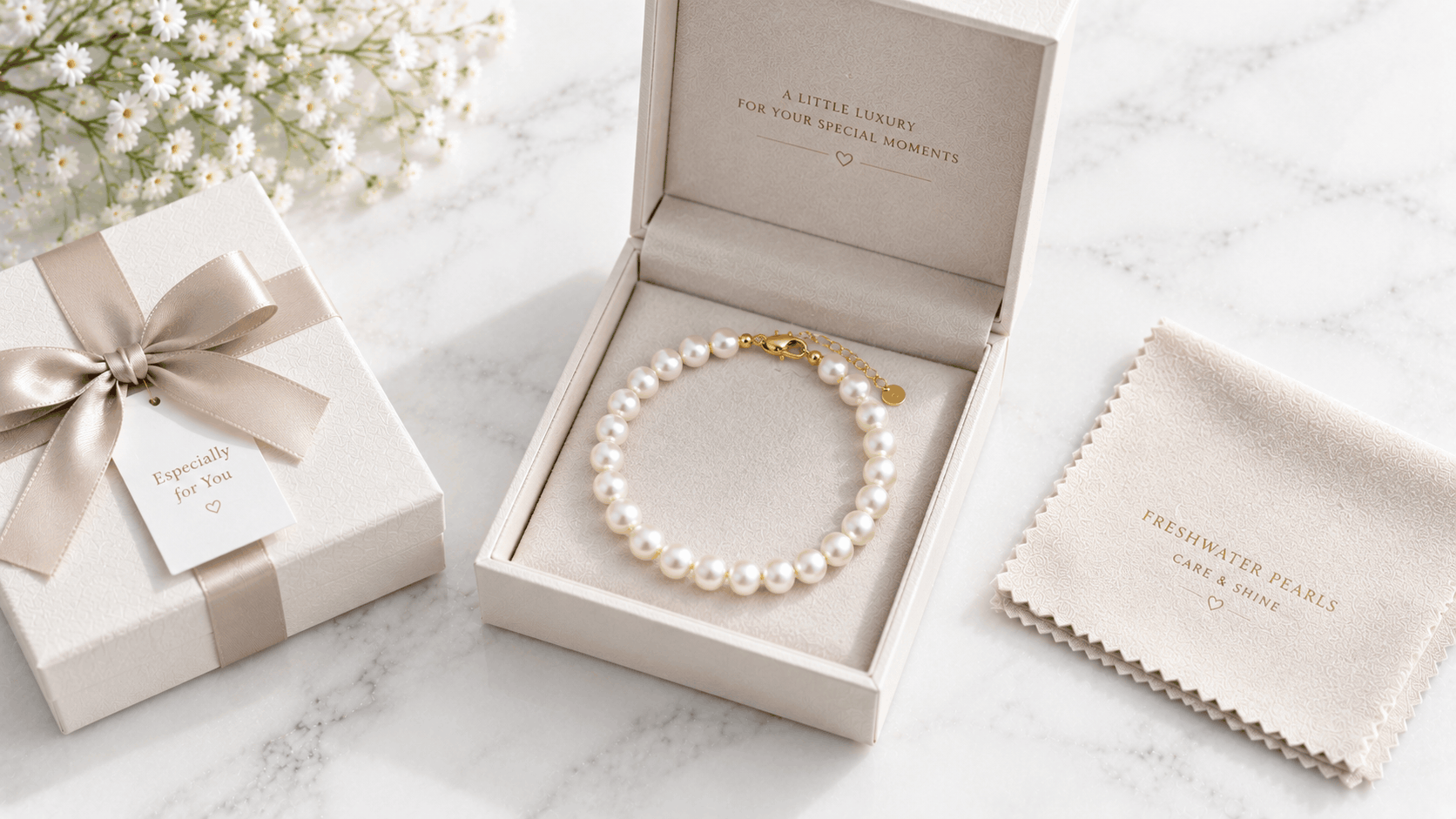
Finally, confirm the required delivery date, packaging and return conditions. PearlsOnly publishes a 90-day returns policy; review the current policy and return instructions for your order. Also, ask what documentation accompanies your chosen bracelet. Do not assume it includes an independent laboratory report.
Pearl Bracelet Freshwater: Everyday Care
Pearls are soft and can be scratched or damaged by chemicals. The GIA pearl care guide recommends gentle handling and warns against ultrasonic and steam cleaning.
- Apply perfume and cosmetics before putting on the bracelet.
- Remove it for showering, swimming, exercise and household cleaning.
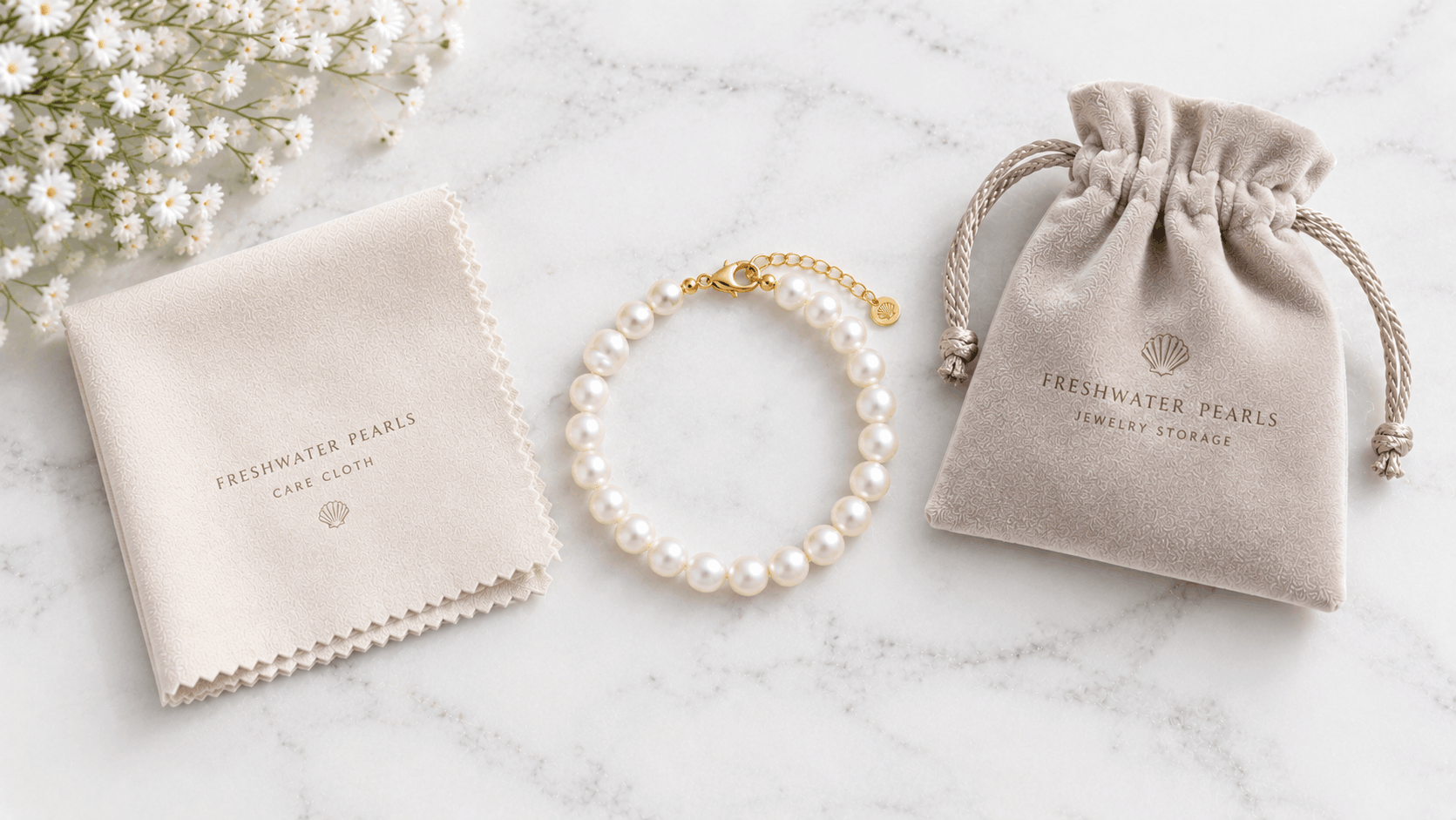
- After wearing, wipe gently with a soft cloth. If using a damp cloth, let the strand dry fully before storage.
- Store separately in a soft pouch or lined compartment, away from heat.
- Inspect thread, knots, elastic and clasp regularly. Ask a jeweler about restringing if you notice stretching, fraying or looseness. Do not rely on a fixed calendar interval.
Frequently asked questions
Are freshwater pearls real pearls?
Yes. Freshwater cultured pearls form in mussels with human assistance. They are different from imitation pearl beads.
Can I wear my bracelet every day?
You can wear it regularly with care, but remove it for activities that expose it to chemicals, abrasion or impact. Consider your routine and the bracelet’s construction.
Can freshwater pearls go in the shower?
Remove the bracelet first. Soap, toiletries and repeated wetting are unnecessary exposure for the pearls and stringing.
Is a larger pearl always better?
No. Size changes appearance, but luster, surface, matching, construction and fit also matter. Choose a size you enjoy wearing rather than the largest available.
How can I check authenticity?
Start with a clear seller description and reliable documentation. If verification matters, seek a qualified gemologist or laboratory assessment. Avoid abrasive home tests that could damage the surface.
A practical checklist before you order
- Choose the style and pearl diameter you want.
- Confirm your wrist measurement and finished bracelet length.
- Read the seller’s grading criteria and treatment disclosures.
- Check the selected clasp, stringing and total configured price.
- Review delivery, documentation and return arrangements.
Ready to compare designs? Explore the PearlsOnly pearl bracelet collection, then use the product specifications to narrow your choices by fit, quality and style.
