
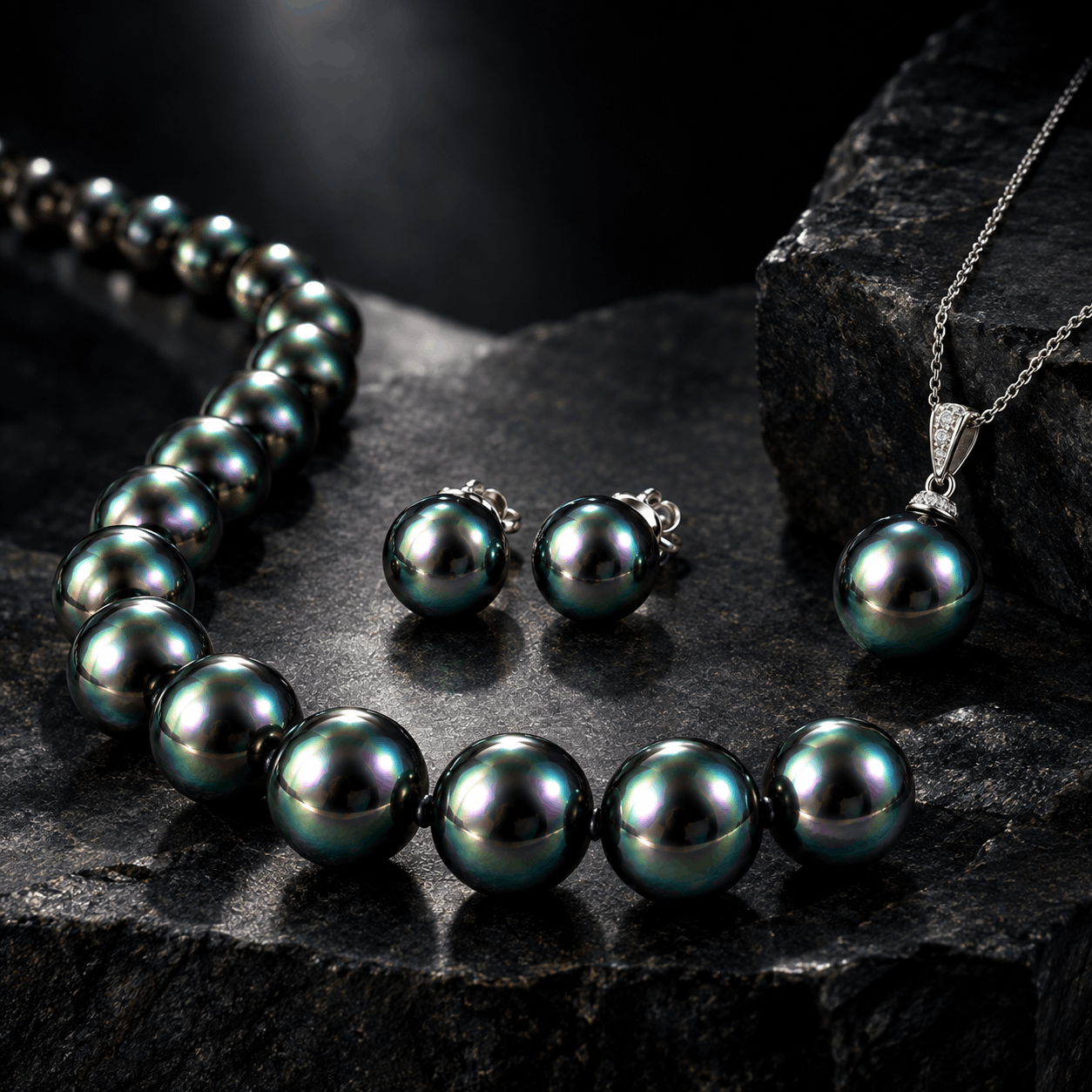
Someone asked me once what the difference was between Tahitian pearl jewellery and regular pearl jewellery. And honestly the easiest answer is just — show them. Hand them a piece of genuine Tahitian pearl jewellery and watch their face. The color shifts. The luster moves. The overtone changes with every angle. There’s nothing quite like it in fine jewelry. So here’s a proper introduction to Tahitian pearl jewellery — what it is, why it’s so distinctive and how to find the right piece for you.
What Is Tahitian Pearl Jewellery
Tahitian pearl jewellery uses pearls produced by the Pinctada margaritifera oyster — the black-lipped pearl oyster — farmed in the lagoons and atolls of French Polynesia. And the defining characteristic of every genuine piece of Tahitian pearl jewellery is natural color. No dye. No irradiation. No treatment after harvest. The extraordinary dark body color with those shifting iridescent overtones comes directly from the oyster itself. So what you’re wearing is genuinely rare — one of the only pearl types in the world where black, grey and dark peacock colors occur naturally at commercial scale.
The French Polynesian government enforces strict minimum nacre thickness standards for all exported Tahitian pearls — currently 0.8mm minimum, with top-grade production typically running 1.5mm to 3mm or more. So genuine Tahitian pearl jewellery carries real structural quality built into the supply chain from the start. That regulatory framework is one of the reasons the “Tahitian” designation carries real meaning — and why it’s worth verifying before buying anything described as Tahitian at an unusually low price.
Tahitian Pearl Jewellery Colors — The Full Overtone Spectrum
Color is where Tahitian pearl jewellery becomes genuinely extraordinary. And understanding the color story before buying is one of the most useful things any buyer can do. The body color of a Tahitian pearl ranges from light grey through silver, dark grey and near-black. But body color is only part of what you see. The overtone — that secondary iridescent color sitting over the base — is what gives each piece its distinctive character.
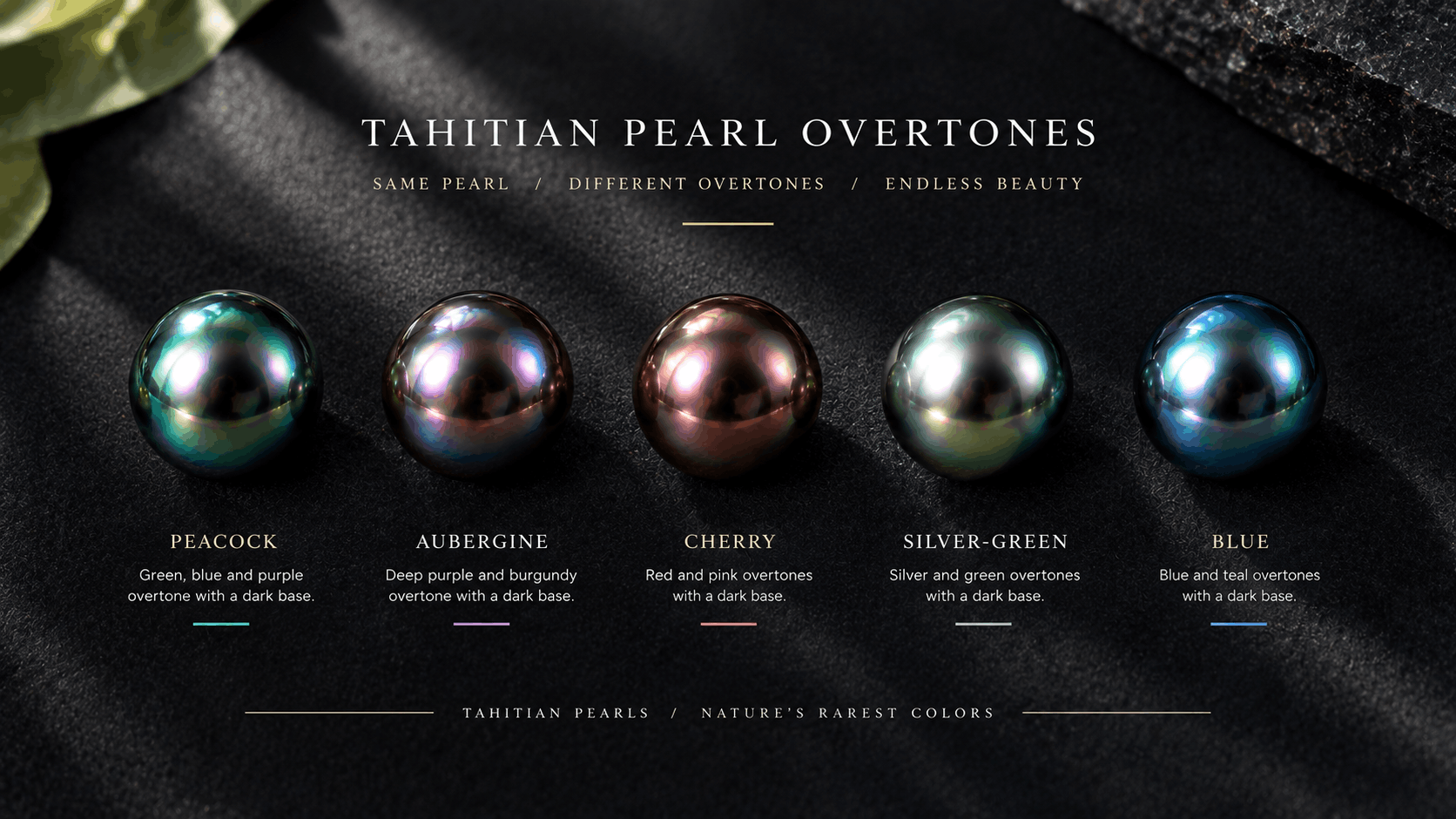
Peacock overtone is the most celebrated. A green-gold iridescence over dark grey that shifts between green, bronze and gold depending on the light source and angle. It’s the most prized overtone in Tahitian pearl jewellery and the one most buyers picture when they imagine genuine Tahitian pearls. Aubergine runs deep purple-violet over dark and reads as extraordinarily luxurious — particularly striking in formal jewellery. Cherry adds a reddish-rose warmth that’s rarer than peacock and especially beautiful against warm skin tones. Silver-green is the most classic and widely available direction — cool, elegant and deeply wearable. And blue overtone — steely and cool — is one of the more distinctive and sought-after colors in current fine jewellery. So Tahitian pearl jewellery isn’t a single color. It’s a whole family of dark pearls with dramatically different personalities.
Tahitian Pearl Necklaces — The Centrepiece of the Category
A Tahitian pearl necklace is the centrepiece of Tahitian pearl jewellery. A matched strand of 10mm to 12mm peacock pearls is one of the most dramatic and distinctive pieces in fine jewelry — dark, dimensional and unlike anything else at the price point. The matching across a full strand — consistent size, overtone, luster and surface quality across 40 to 50 individual pearls — is genuinely difficult to achieve. And a well-matched Tahitian pearl necklace shows that difficulty in every pearl.
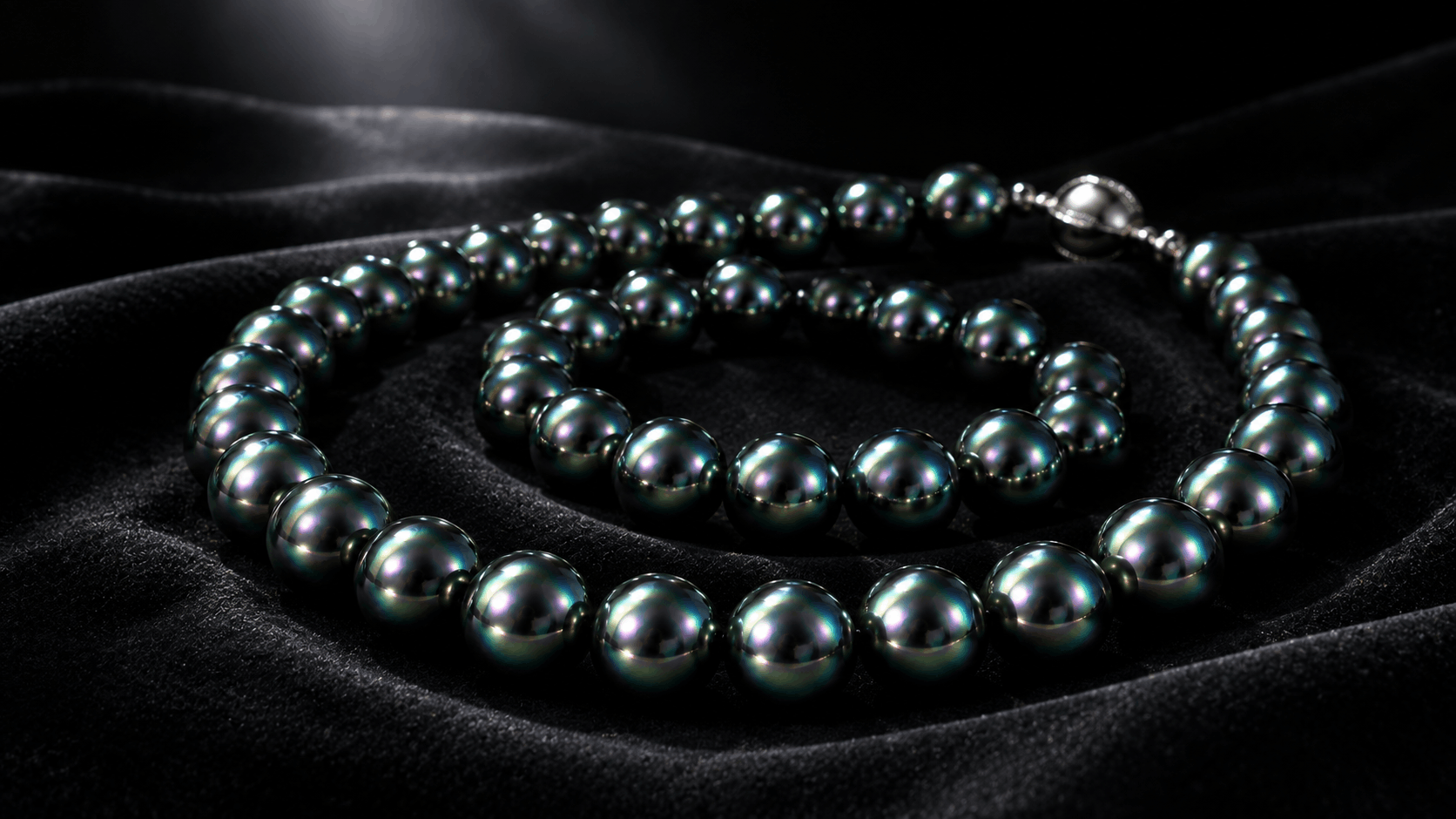
Princess length at 17 to 19 inches is the most versatile starting point. Works across virtually every occasion. Matinee at 20 to 24 inches adds more formal presence. And opera length at 28 to 36 inches in matched Tahitian pearls is extraordinarily rare — the consistency of luster and overtone across a longer strand at this quality level is one of the most difficult achievements in pearl jewellery production. But worth it. Genuinely worth it.
Tahitian Pearl Earrings — The Most Wearable Entry Point
For most buyers, Tahitian pearl jewellery starts with earrings. And for good reason. A pair of 9mm to 10mm Tahitian pearl studs is the single most accessible and versatile piece in the whole Tahitian pearl jewellery category. The dark color with natural overtones reads beautifully at everyday scale — polished without being formal, distinctive without being loud. Pop them on with anything and the outfit immediately looks more considered.
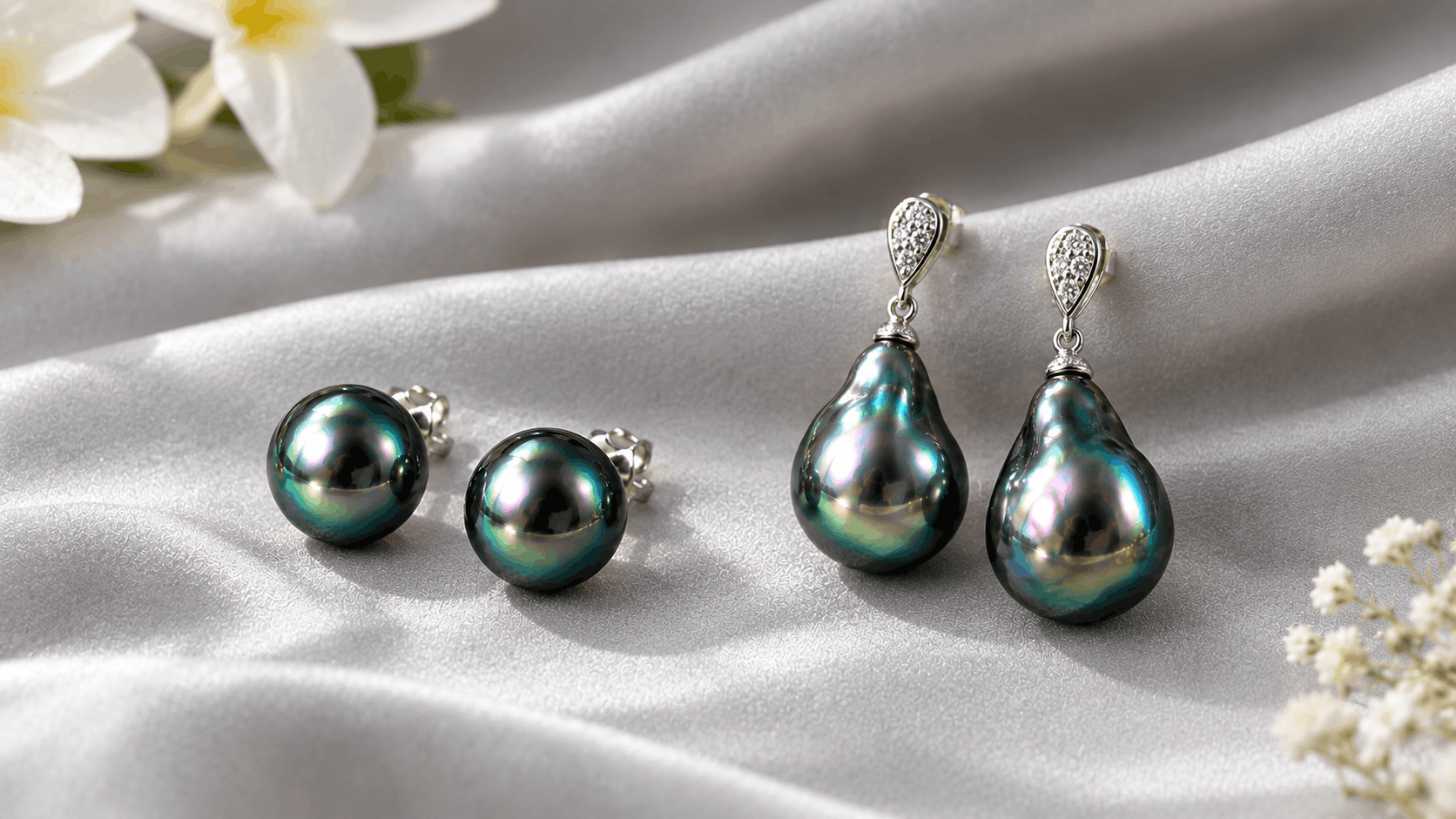
Drop earrings add movement and drama — a Tahitian teardrop on a fine gold setting is one of the most striking combinations in fine jewelry for formal occasions. And baroque Tahitian pearl earrings are one of the strongest 2026 jewellery trends — freeform irregular shapes with complex surface character that interact with light in ways perfectly round pearls don’t. No two pairs look identical. That individuality is exactly what’s driving demand for them right now.
Tahitian Pearl Pendants — One Pearl, Maximum Impact
A Tahitian pearl pendant is the simplest and often the most powerful format in Tahitian pearl jewellery. One exceptional pearl on a fine gold or silver chain. Nothing else. And yet a round 11mm peacock Tahitian pearl on a yellow gold chain is a piece that stops people mid-sentence at dinner parties.
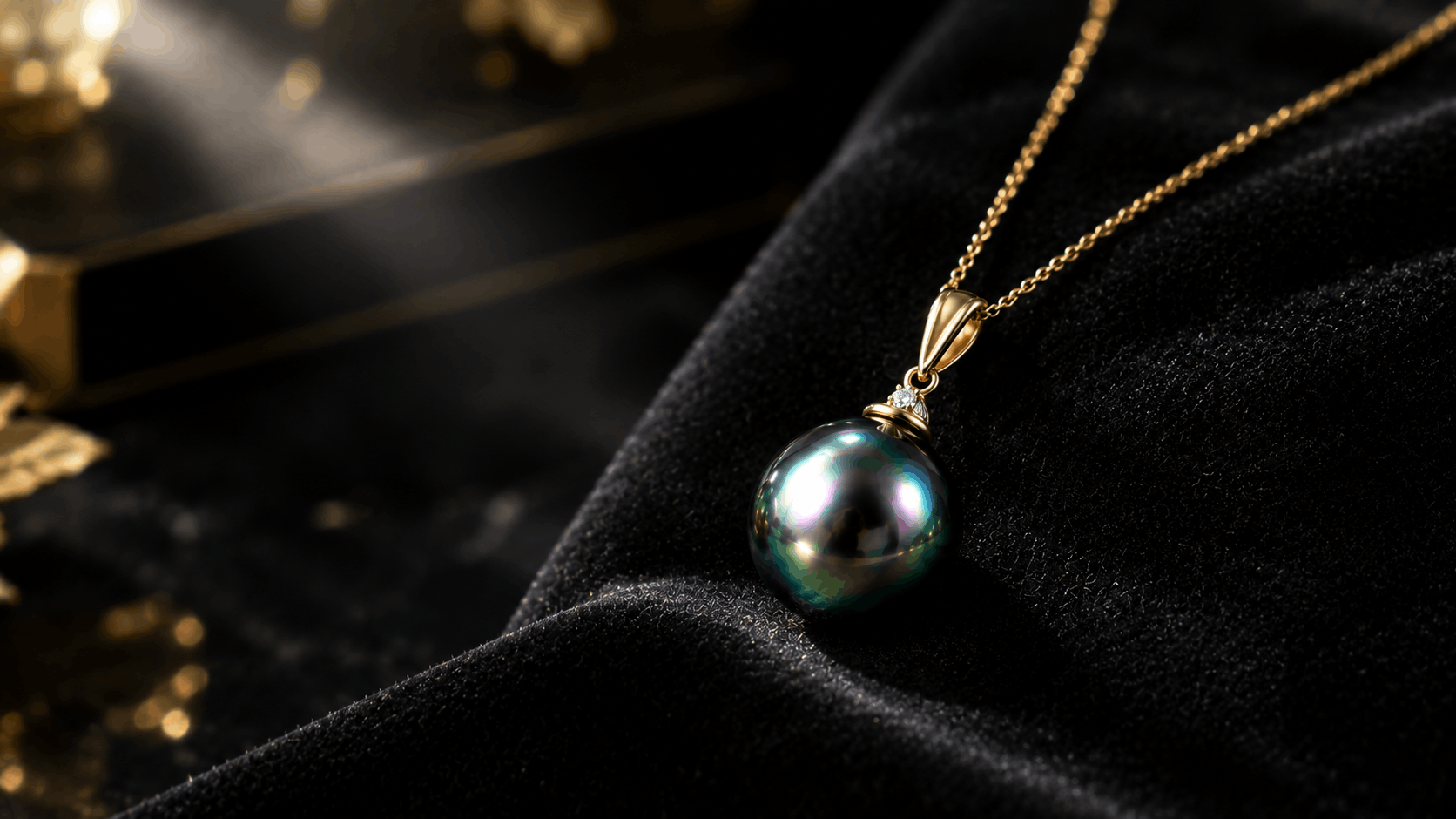
The pendant format works so well for Tahitian pearls because it lets the single pearl lead entirely. No competing design elements. No setting that dominates. Just the pearl, the chain and however much of the neckline the wearer chooses to show. Round pendant pearls are the most classic. Drop or teardrop pendants add elegant movement. And baroque pendant pearls are the most distinctive — each one genuinely unique, each one a small sculpture in its own right. Browse the full Tahitian pearl pendant range to find the format that suits the wearer’s style.
Tahitian Pearl Rings and Bracelets
Beyond the headline pieces, Tahitian pearl jewellery extends across rings and bracelets — and both categories offer genuine design interest that goes beyond what white pearl jewellery typically delivers.
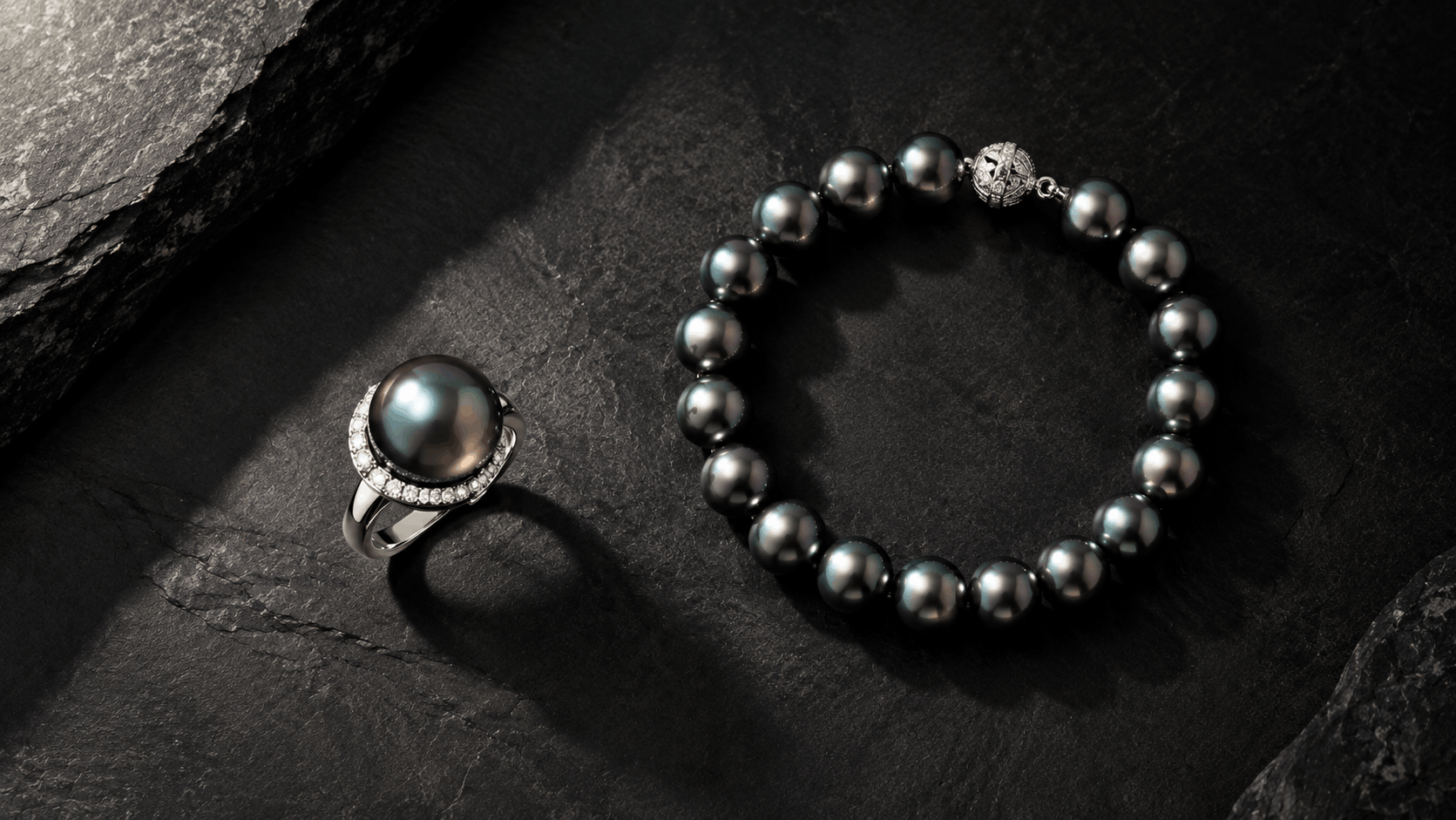
Tahitian pearl rings — particularly statement designs with a single large baroque or round pearl in an architectural gold band — are one of the stronger fine jewellery surprises of 2026. The dark pearl in a ring setting reads as wearable sculpture rather than conventional jewellery. Personal. Bold. Completely unlike a standard gemstone ring. And a Tahitian pearl bracelet — a single strand of 10mm to 11mm matched pearls with a quality gold clasp — worn alone against bare skin is one of those pieces that consistently draws comments at summer occasions. Conversational jewellery at its most effective.
How to Choose Tahitian Pearl Jewellery
A few principles apply across every category of Tahitian pearl jewellery. Luster first. Always. Top-grade Tahitian pearl luster is deep, satiny and dimensional — light seems to move inside the pearl rather than reflecting off the surface. If a piece looks flat or dull under natural light, the nacre quality isn’t there regardless of what the grade label says. So always evaluate luster in natural daylight — not indoor store lighting which flatters everything.
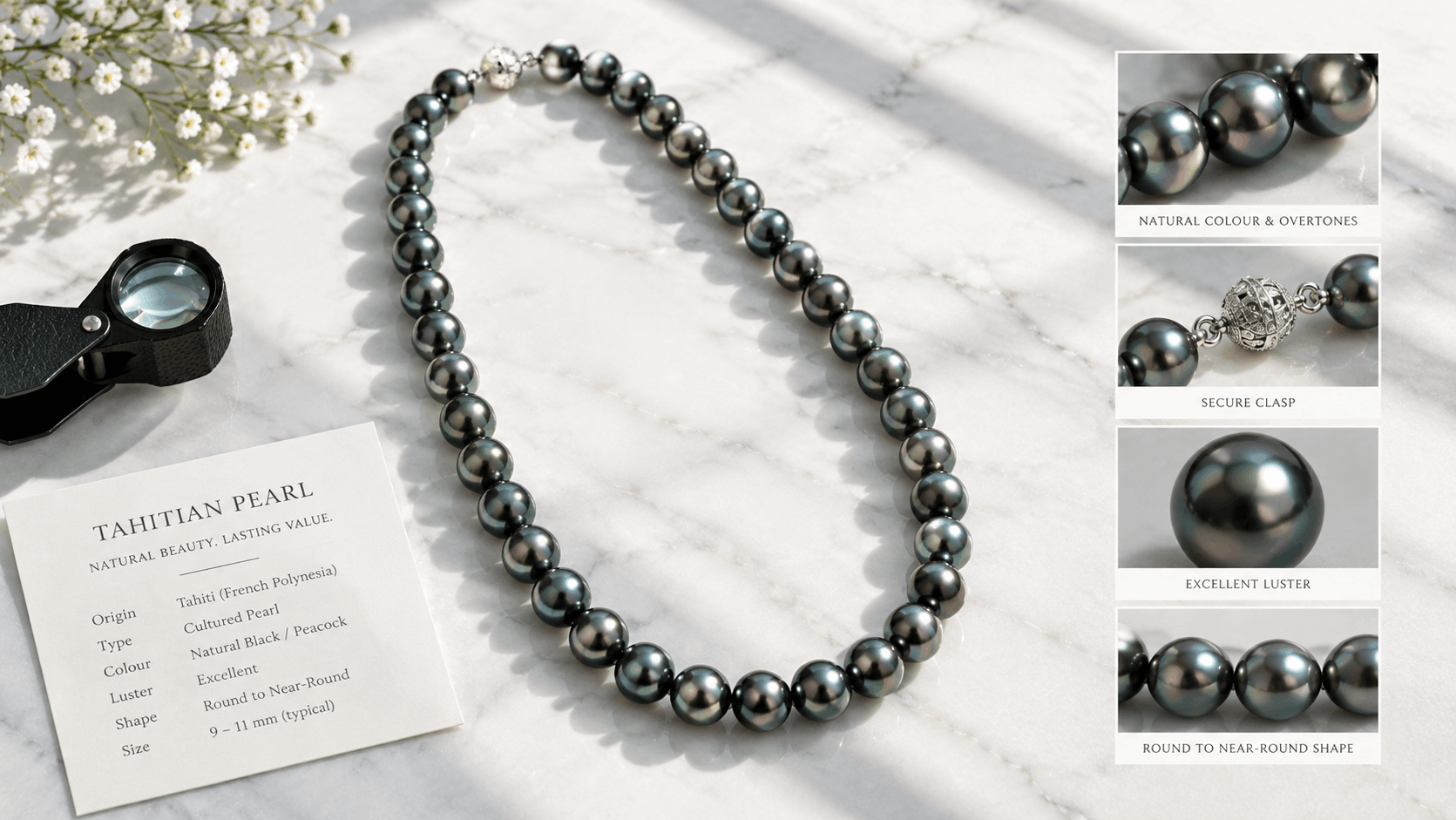
Overtone consistency matters significantly in multi-pearl pieces. A necklace or bracelet where the overtone varies inconsistently across the strand reads as lower quality immediately — even if individual pearls are strong. And always verify origin as genuine French Polynesian Tahitian production. Not “Tahitian style.” Not “dark pearl jewellery.” The actual origin. Because the farming environment, the oyster species and the regulatory standards are specific to French Polynesia and they matter directly to the quality of what you’re buying.
Caring for Tahitian Pearl Jewellery
Tahitian pearls are saltwater pearls with thick nacre — genuinely robust compared to freshwater alternatives. But basic care matters significantly at this price point. So put pieces on last when getting ready and take them off first. Perfume, hairspray and cosmetics dull nacre over time. And the dark color of Tahitian pearls means any surface dulling shows more obviously than it would on white pearls.
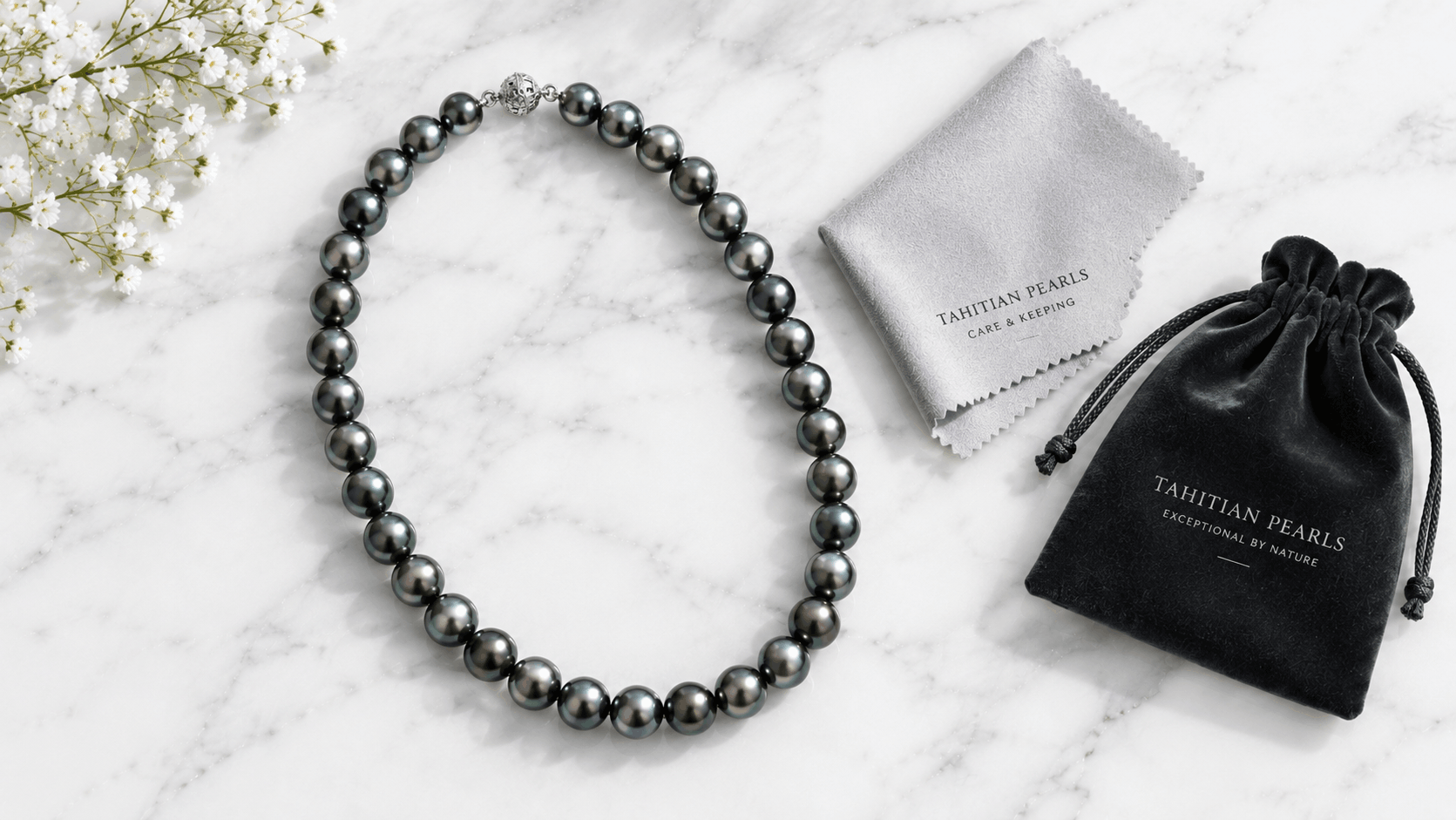
Wipe gently with a soft damp cloth after wearing. Then store separately from harder jewelry — diamonds and sapphires scratch nacre even through brief contact in a jewellery box. A soft pouch or lined compartment is all that’s needed. And get strands restrung every few years if worn regularly. Because silk thread weakens quietly over time — and a broken strand of Tahitian pearl jewellery is an entirely avoidable situation. Basic maintenance. Decades of beauty. That’s the whole story.
