
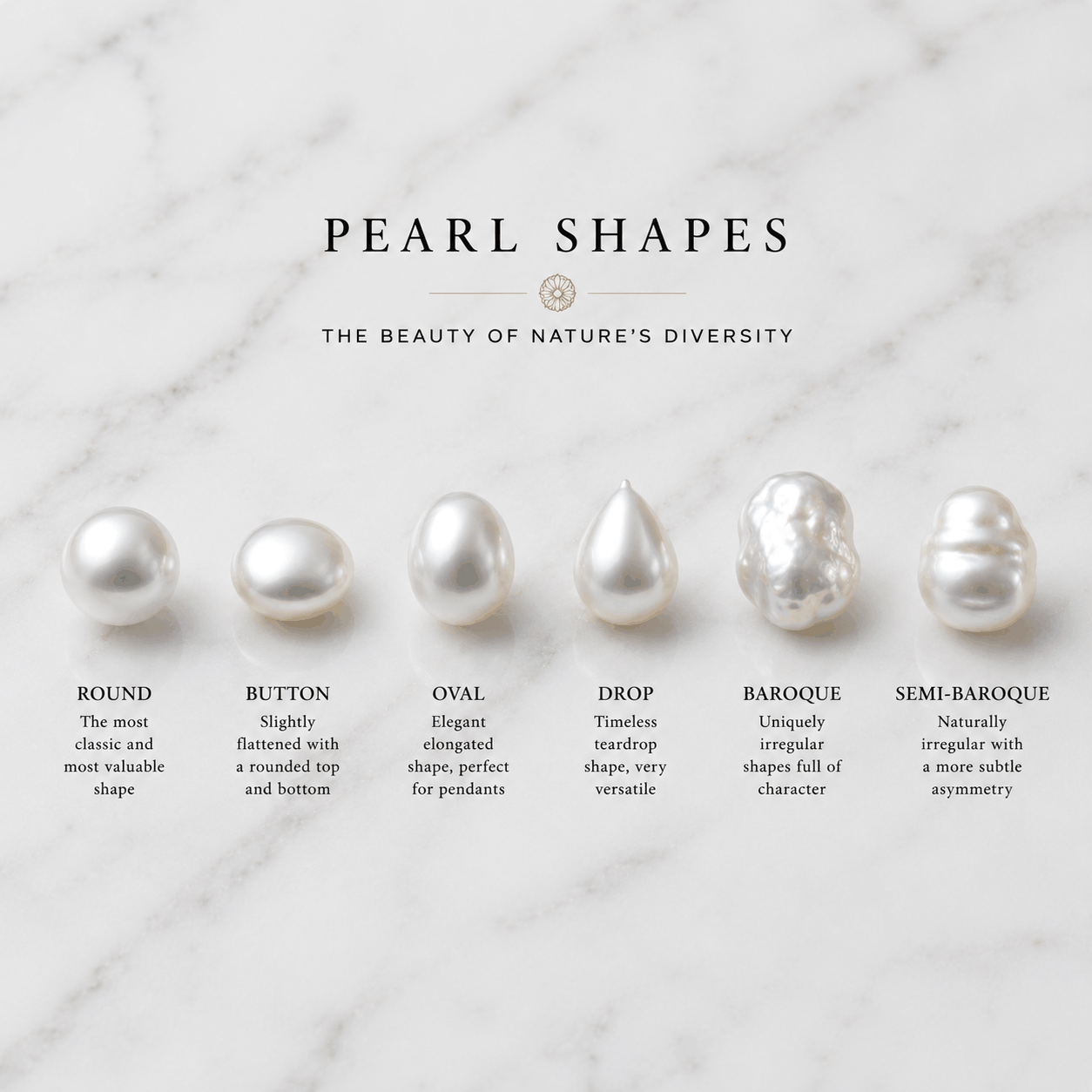
Walked into a pearl store expecting everything to be round. Left knowing that the types of pearl shapes are one of the most fascinating and misunderstood aspects of the whole category. Rounds are rare. Baroque is having a cultural moment. Drop shapes photograph in ways nothing else does. And button pearls solve a problem most earring buyers don’t even know they have. So here’s the complete breakdown of every type of pearl shape — what each one is, why it forms that way and what it means for value, style and how the piece wears in real life.
Why Pearls Grow in Different Shapes
Understanding types of pearl shapes starts with understanding why shape varies at all. Pearls don’t get cut or carved like gemstones. The shape forms entirely inside a living oyster or mussel during the nacre layering process. So it’s a biological outcome — not a manufacturing decision. The position of the nucleus inside the mollusk, water temperature, the oyster’s movement, farming conditions and even the animal’s age all influence what shape emerges from the harvest.
That’s exactly why perfectly round pearls are rare and expensive. Getting a living creature to produce a geometrically perfect sphere consistently is genuinely difficult. Most pearls — even in high-quality cultured pearl farming — fall somewhere between near-round and baroque on the shape spectrum. And that’s not a flaw. It’s just nature producing what nature produces. The different types of pearl shapes each have their own character, their own applications and their own place in fine jewelry.
Round Pearls — The Rarest of All Pearl Shapes
Round is the most recognized and most coveted of all types of pearl shapes. Perfectly spherical. Rolls in a straight line on a flat surface — the classic quick test. And genuinely the hardest shape to produce consistently across an entire harvest, which is exactly why round pearls command the highest prices across almost every pearl type.
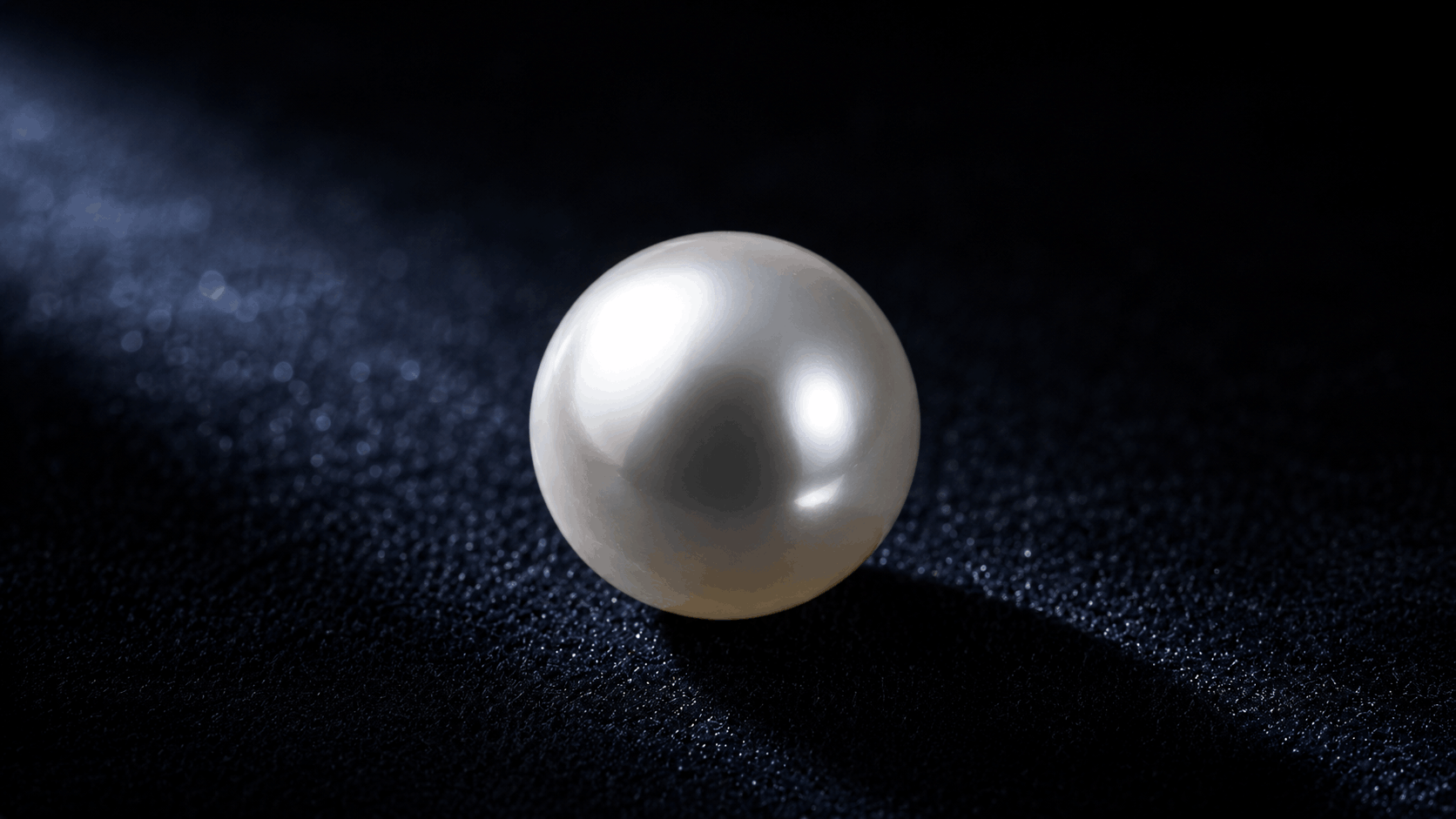
Top-grade round pearls appear primarily in Japanese Akoya, South Sea and Tahitian varieties. Freshwater rounds exist too — but genuine round freshwater pearls are rarer than most buyers assume. Many freshwater pearls labeled “round” are technically near-round under close inspection. So if perfect symmetry matters, Akoya remains the benchmark. Nothing else quite matches that sharp, spherical luster consistency across a matched strand.
Near-Round — One of the Most Popular Pearl Shapes
Near-round sits just below round on the pearl shape chart — slightly off-perfect but not noticeably so to the naked eye in a finished piece. In a worn necklace, most people genuinely can’t distinguish near-round from round without close inspection. But the price difference can be significant. So near-round offers exceptional value — all the visual impact of round at a noticeably lower price point.
This is the most common shape in quality freshwater pearl jewelry and sets. And for everyday wear and most formal occasions, near-round is completely sufficient. The obsession with perfect roundness makes more sense for collector pieces or very high-end strands where every millimeter of symmetry is scrutinized. For most buyers, near-round is the genuinely smart choice.
Button Pearls — The Underrated Shape
Button pearls are flattened on one or both sides — like a sphere that’s been gently compressed. One of the more distinctive types of pearl shapes and genuinely one of the most practical. The flat base makes button pearls ideal for earring settings — they sit flush against the earlobe without tilting or rotating throughout the day. That’s a practical advantage that round pearls in post settings don’t always offer.
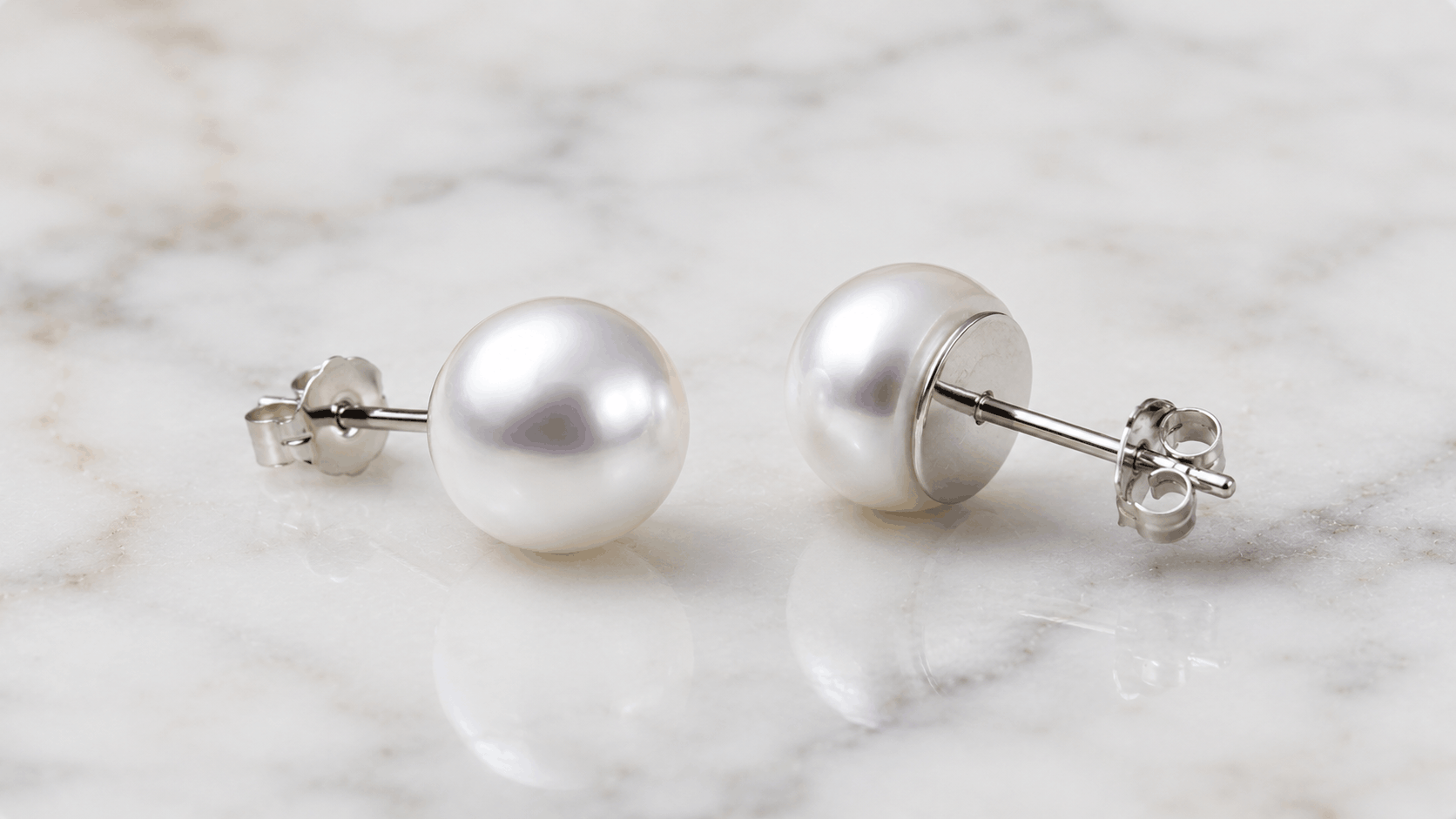
Button pearls appear frequently in freshwater pearl sets and stud earring collections. From the front they read as classic round pearls — so from most viewing angles they look exactly like the more expensive round option. But the flat base gives jewellers much more to work with in terms of setting design and security. Plus they tend to cost less than equivalent round pearls. A genuinely smart choice if earrings are the priority.
Oval Pearls — Elegant and Elongating
Oval pearls are elongated along one axis — wider in the middle and tapering gently at each end. One of the most elegant types of pearl shapes, particularly in pendant and drop settings where the elongated silhouette creates a naturally flattering vertical line. In a pearl shape comparison, oval sits between round and drop — more symmetrical than a teardrop but with that same elongating quality that suits pendant formats particularly well.
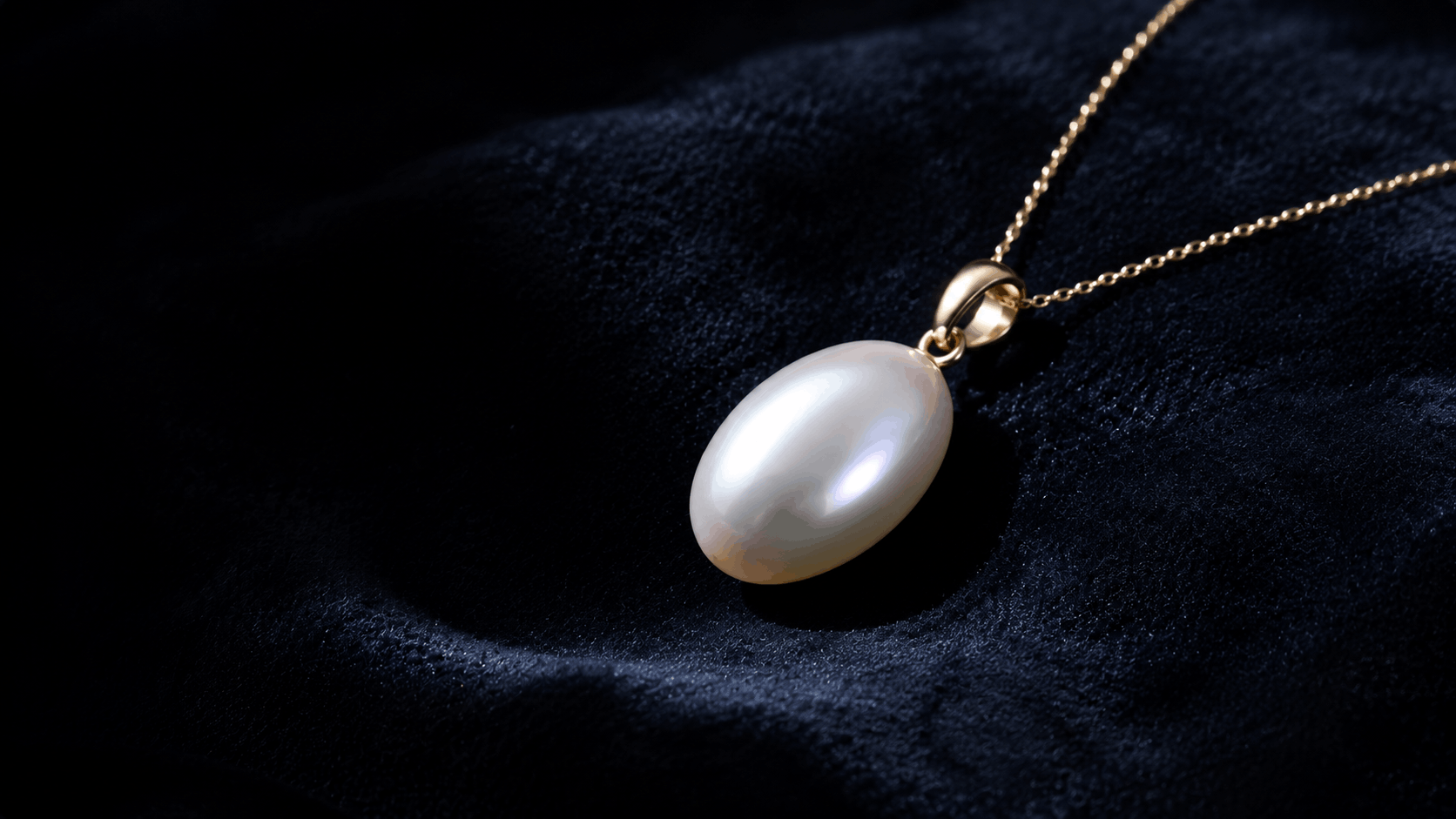
Freshwater oval pearls are widely available and often excellent quality at accessible prices. In a pendant setting, an oval pearl hangs beautifully and the shape itself becomes part of the design rather than just the material. Worth serious consideration for buyers building a pendant piece rather than a classic strand where uniformity matters more.
Drop and Teardrop Pearls — The Most Dramatic Shape
Drop pearls taper to a point at one end — the classic teardrop silhouette. The most dramatic of all the types of pearl shapes and genuinely one of the most striking in finished jewelry. A well-formed drop pearl with strong luster is a showstopper in earrings or pendant settings. Simple as that.
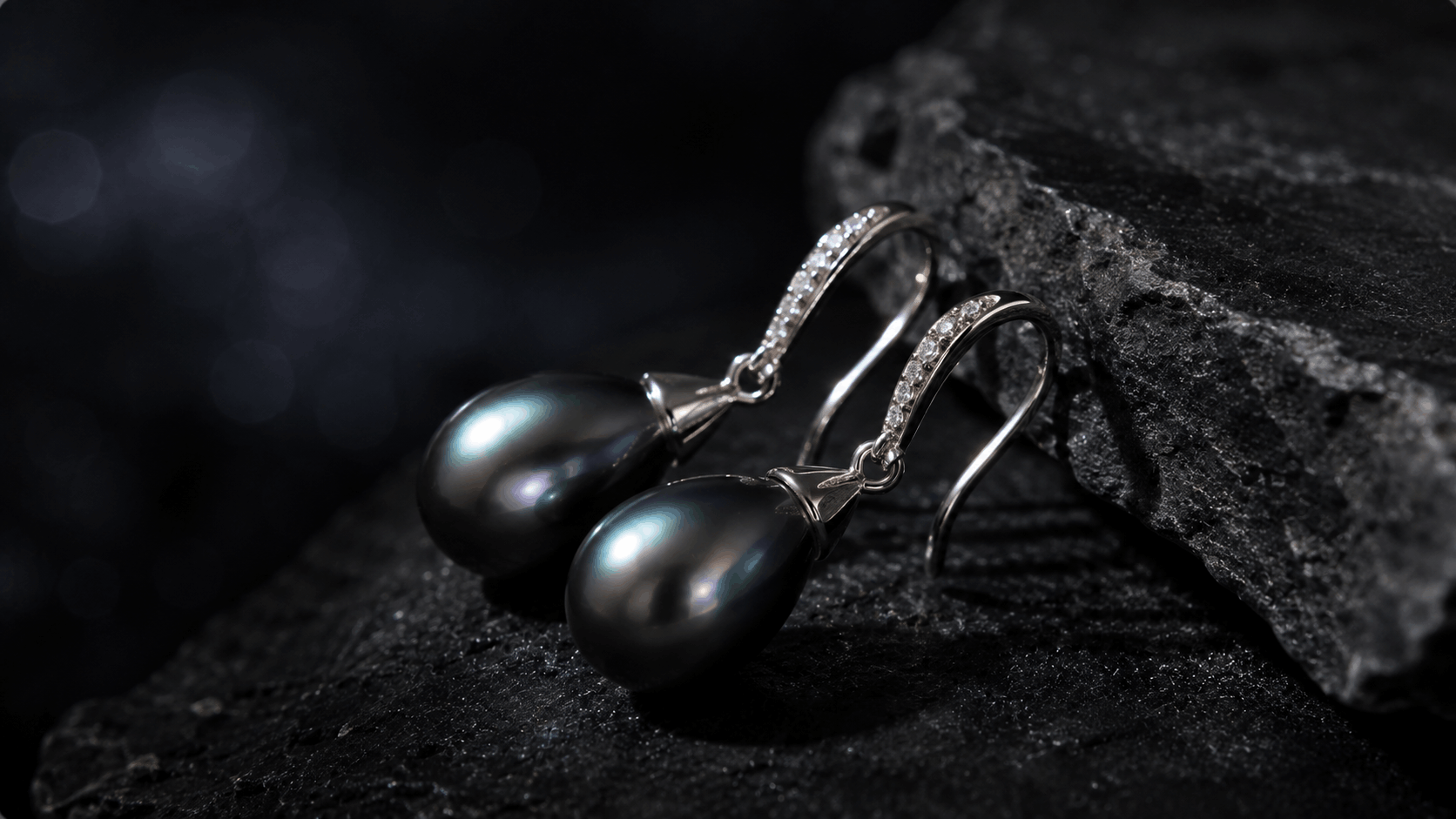
Symmetrical drops — where the taper is perfectly centered and the pearl hangs straight — are the most desirable and the most valuable in this category. Asymmetrical drops still look beautiful but move differently when worn. Drop pearls appear most frequently in drop earrings and pendant settings where the tapered point hangs downward naturally and catches the eye with every movement. Tahitian and South Sea drops are particularly prized — the combination of size, natural color and teardrop silhouette is genuinely hard to beat anywhere in pearl jewelry.
Baroque Pearls — The Most Individual Shape
Baroque is the catch-all category for pearls that don’t conform to any regular shape. Freeform. Irregular. Completely unique from one pearl to the next. And in 2026, one of the most sought-after types of pearl shapes in contemporary jewelry design — not despite the irregularity but because of it.
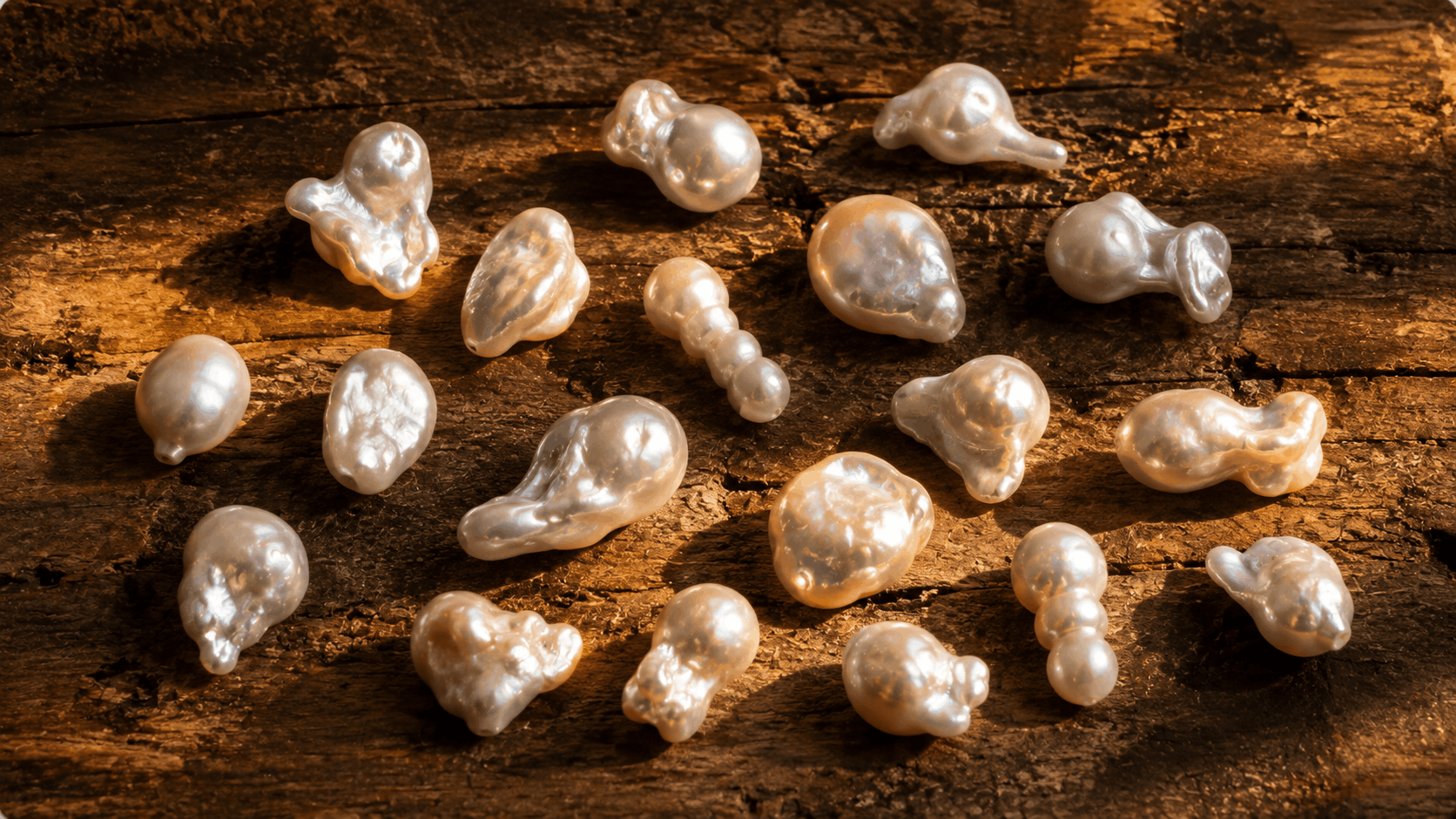
Baroque pearls have something perfectly round pearls don’t — personality. Each one is genuinely different. No two baroque strands look identical. The irregular surfaces also interact with light in complex ways, creating luster effects and shadow play that uniform shapes simply can’t replicate. Freshwater baroque pearls are especially popular right now — available in a wide range of sizes and colors, genuinely distinctive and significantly more affordable than round equivalents. If you want something that looks unlike anything else in the room, baroque is the answer.
Semi-Baroque — The Middle Ground of Pearl Shapes
Semi-baroque sits between near-round and fully irregular baroque on the pearl shape spectrum. These pearls have a recognizable basic shape — oval, button or drop — but with slight irregularities that push them outside the symmetrical categories. Think of it as baroque with structure. Or near-round with character. Either description works.
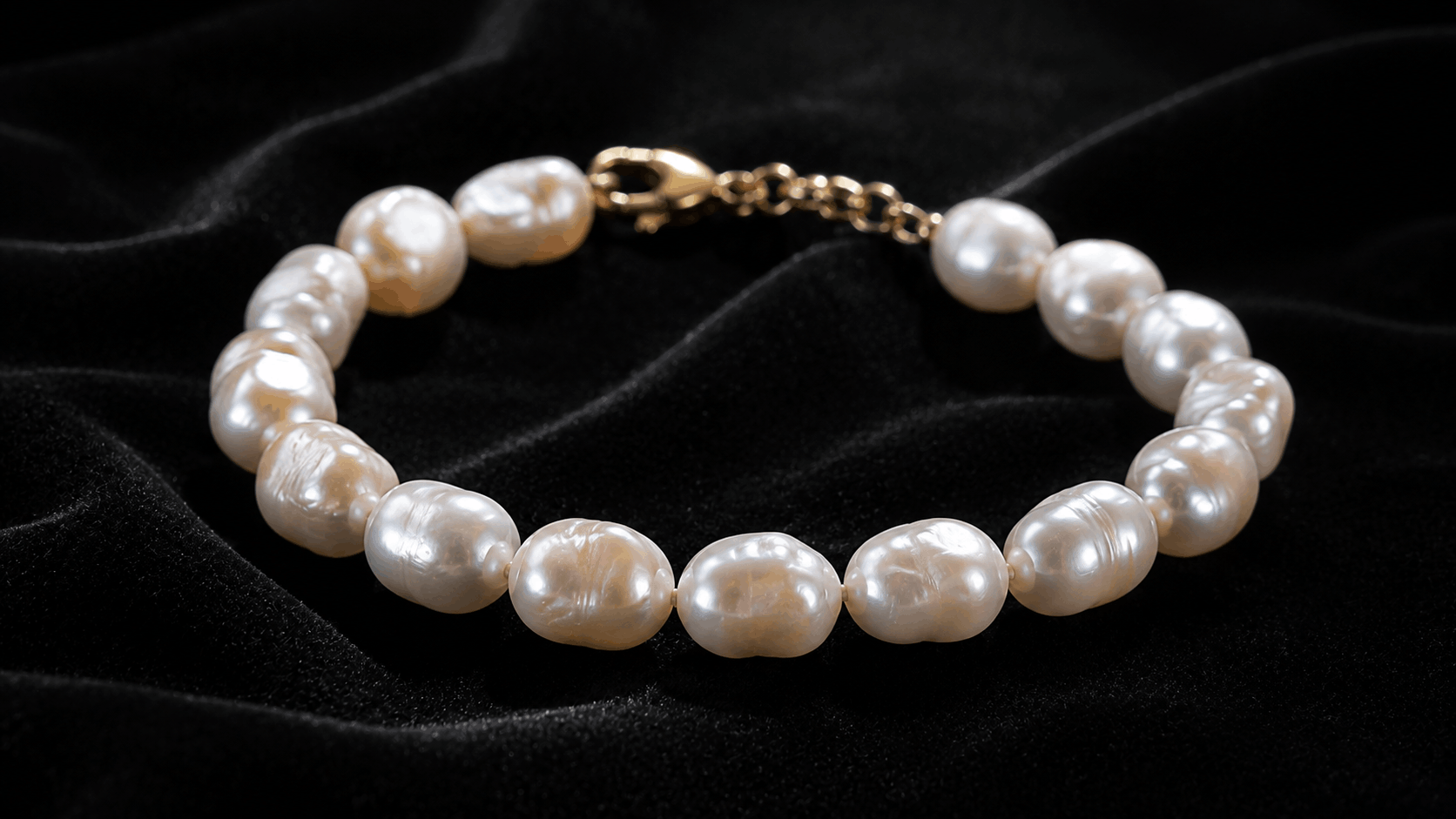
Semi-baroque pearls often offer the best value in a pearl shape comparison. More affordable than perfectly shaped pearls. More refined than fully freeform baroque. And in finished jewelry they frequently look stunning — the slight irregularity adds organic warmth that geometric perfection sometimes lacks. Many of the most beautiful pearl bracelets and casual necklaces use semi-baroque freshwater pearls precisely because the shape variety across the strand creates visual interest that a uniform round strand doesn’t have.
How Shape Affects Value in Types of Pearl Shapes
Shape is one of the five main quality factors in pearl grading — alongside luster, surface quality, nacre thickness and size. And it affects value significantly across every pearl type. Round commands the highest premium because it’s the hardest to produce and the most universally in demand. Near-round sits close behind. Then oval and drop — desirable shapes with specific applications. After that, button. Then semi-baroque. Then baroque at the most accessible price point within any given pearl type and quality level.
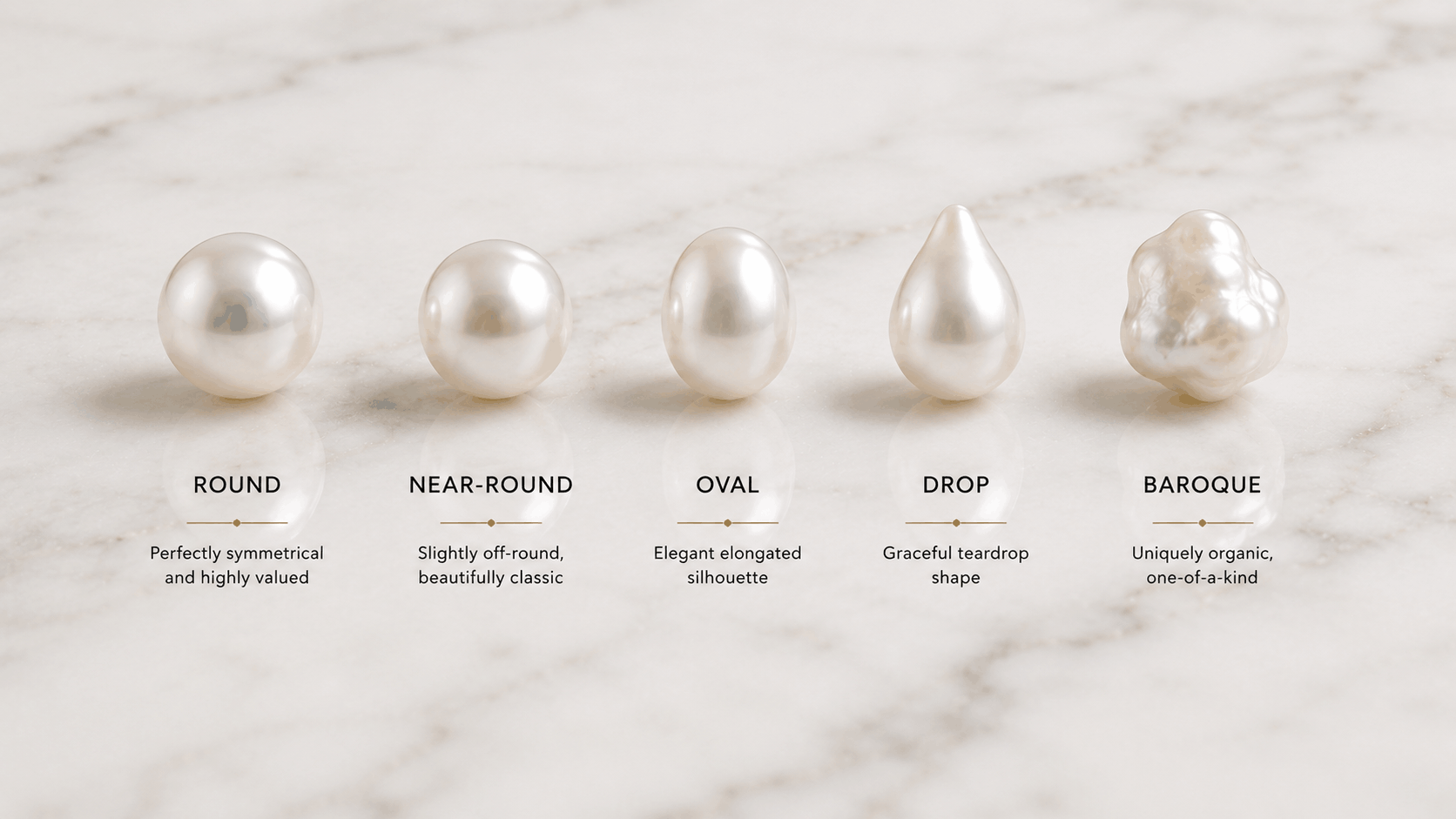
But here’s the thing most buyers miss — shape is only one factor. A baroque pearl with exceptional luster and near-flawless surface in a large size can be worth significantly more than a round pearl with dull luster and obvious surface marks. So the shape hierarchy is real but it’s not absolute. Within each shape category, luster and nacre quality determine the final value more than the shape classification alone. Understanding all the types of pearl shapes and how they interact with other quality factors is what separates a genuinely informed purchase from one made on shape assumption alone.
Choosing the Right Pearl Shape for Your Piece
The right pearl shape depends on the piece, the occasion and honestly — what speaks to you when you see the options side by side. Round and near-round are the classic choices for strands and sets where uniformity and tradition matter. Drop and oval are the shapes for pendants and earrings where the silhouette itself contributes to the design. Button is the practical smart pick for stud earrings specifically. And baroque or semi-baroque are for buyers who want something genuinely personal — something that doesn’t look like it came off a production line.
There’s no hierarchy where round always beats everything else. It’s about matching the right type of pearl shape to the right purpose, the right style and the right wearer. Browse the full collection at PearlsOnly across pearl necklaces and pearl earrings to see every shape represented in finished jewelry — and find the one that genuinely speaks to you.
